
In brief
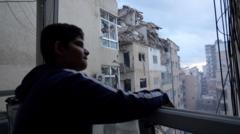
In the aftermath of a recent ceasefire between Israel and Hezbollah, families have returned to Tyre, Lebanon, only to confront the ruins left by airstrikes. Among them, the Marouf family discovers their former home reduced to rubble, emphasizing the overwhelming sadness and uncertainty that lingers in the air. Although the ceasefire brings a brief respite, the toll of the conflict becomes starkly apparent as the reality of their destroyed lives sinks in.
In the heart of Tyre, the Marouf family ambled through the remnants of their neighborhood, grappling with the incomprehensible destruction. A mere few hours after a fragile ceasefire was declared, the family's return revealed a landscape marred by chaos: their once-familiar building lay in tatters, bearing the scars of an Israeli airstrike. The acrid smoke rising from the wreckage served as a grim reminder of the violence that had unfolded.Mohamad Marouf, a car dealer, strained to maneuver through debris-laden corridors, flashlight in hand, before finally reaching the door of their apartment. The heartbreak was palpable as he surveyed the disintegration of his home, lamenting the loss of cherished belongings now rendered useless. “I’m filled with sorrow over our beautiful house," he expressed, alongside his wife and two young sons, their hearts heavy with the weight of their newfound reality.As families streamed back into the city, a kaleidoscope of emotions emerged. While some displayed Hezbollah flags in a show of defiance, others voiced a somber acknowledgment that this recent hostilities have only led to devastation—nearly 4,000 lives lost and significant infrastructural damage painted a stark tableau of the war's toll. Reports revealed that more than a million were displaced within the country, forced from their homes amidst advancing military efforts.The conflict ignited in October 2023, spurred by Hezbollah's support for Palestinian actions against Israel, culminating in escalated airstrikes and significant bloodshed. The ceasefire, hailed by some as a temporary victory for Hezbollah, also marks a critical moment for the future stability of the region—yet uncertainty lingers as residents begin to contemplate recovery.Visitors to Tyre observed the resilience of its inhabitants, including Deed Badawi, a restaurant owner whose establishment, over eight decades old, now lay damaged but not defeated. "We will rebuild," he promised, reflecting the tenacity of a community determined to rise from the ashes. Meanwhile, the Lebanese military’s mobilization and the additional troop presence seek to herald a new chapter in this complicated narrative, with questions of what lies ahead remaining unresolved.As citizens begin to sift through the debris of their once-vibrant lives, the road to recovery presents numerous challenges—financial support remains uncertain, and skepticism clouds the future of the region. Even as Mohamad Marouf expresses hope for assistance from Hezbollah in restoring his home, the broader implications of the ceasefire underscore a reality where healing will require more than a mere cessation of hostilities. As Tyre stands at a crossroads, its people brace for what comes next.