In brief
Abida Sultaan broke barriers as a Muslim princess, showcasing independence and courage against social norms, while navigating the tumultuous changes of post-partition India.
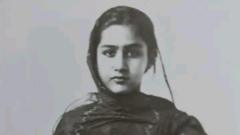
Abida Sultaan, born in 1913, was the daughter of the last Nawab of Bhopal, Hamidullah Khan, and epitomized a life far removed from the stereotypes associated with royal women of her time. Rejecting purdah, the traditional custom of seclusion, she led a life marked by adventurous pursuits such as polo, shooting, flying planes, and driving her own Rolls-Royce from a remarkably young age. Her family, a line of 'begums,' had governed Bhopal for over a century, and Abida's upbringing was both progressive and rigorous under the strict guidance of her grandmother, Sultan Jehan.From the age of 15, Abida took on the role of heir to the throne, navigating a male-dominated political landscape while engaging with leading figures in India's independence movement. Her autobiography, "Memoirs of a Rebel Princess," narrates her rigorous daily routine commencing with early morning Quran recitation followed by a blend of sports, arts, and domestic chores. Despite her royal privileges, Abida demonstrated fierce independence, especially when she resisted her grandmother's attempts to impose purdah.In a twist of fate, Abida was married to her childhood friend, Sarwar Ali Khan, at just 12 years old, an experience she humorously recounted in her memoir, highlighting the surprise and chaos that accompanied her nuptials. However, her marriage was fraught with difficulties, and after facing challenges related to intimacy and personal freedom, she ultimately left her marital home following a dramatic custody battle for her son, Shahryar.Abida’s resolve was showcased in a bold confrontation with her estranged husband, where she threatened him with a gun to secure her son's custody. Afterward, she returned to Bhopal, balancing her role as a mother with her political responsibilities until the princely state merged with Madhya Pradesh in 1949. Abida was not just a royal in a turbulent political era but also a vocal advocate for women’s rights and democracy, making her mark at pivotal political gatherings alongside leaders like Mahatma Gandhi.The aftermath of the 1947 partition brought immense challenges for Muslims in India, which culminated in Abida’s decision to immigrate to Pakistan in 1950—a choice driven by rising discrimination against her community. In Pakistan, she continued her advocacy for democracy and women’s rights until her passing in 2002.Despite a relative decline in her legacy due to political changes and growing sectarian sentiments, Abida Sultaan’s impact remains significant in both Bhopal and Pakistan, where she is fondly remembered as 'bia huzoor.' Historical journalist Shams Ur Rehman Alavi emphasizes the importance of keeping her story alive, noting that her spirit continues to inspire future generations.