
In brief
In a significant shake-up, the White House has announced it will oversee which media outlets gain access to President Trump, a move criticized by the White House Correspondents' Association as jeopardizing press independence.
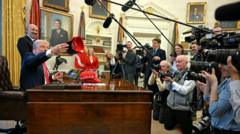
The White House has undertaken a controversial change in press access by assuming control over the selection of reporters covering President Donald Trump. The new policy, disclosed by Press Secretary Karoline Leavitt, signifies a departure from over a century of practice where the White House Correspondents' Association (WHCA) determined which outlets would participate in the daily "pool" that reports on presidential activities.Leavitt emphasized that the revised approach aims to include "new media" formats such as streaming services and podcasts while still allowing traditional legacy media to retain their roles, suggesting that this will diversify the voices that shape news coverage from the Oval Office and events on Air Force One. “We're restoring power back to the American people," she stated during a news briefing on Tuesday.The WHCA, established in 1914, has historically managed the logistics of pool reporting, which consists of a limited number of journalists who share coverage with broader media outlets. In a statement, the association expressed grave concerns that this shift undermines the independence of the press by potentially favoring certain news organizations perceived as friendly to the Trump administration.The Associated Press, which recently lost access to presidential events, is currently embroiled in a legal battle seeking to recover its rights after being blocked following a dispute over a terminology change related to the Gulf of Mexico. The AP's exclusion has thrown into question the practical implications of the new press pool policy, leading to fears of a media landscape increasingly swayed by governmental control.President Trump later remarked on the decision, explicitly stating, "We're going to be calling those shots," confirming the administration's approach to managing press relations. The WHCA has firmly stated that this move grants undue power to the White House, countering claims that it enhances press freedom. As the landscape for reporting on presidential activities evolves, many question the potential impacts on journalistic integrity and public access to information.

