
In brief
On Sunday, a Boeing 767‑300 cargo aircraft bound for Miami crashed after going too fast, overrunning the runway, striking ground vehicles, and catching fire. The National Transportation Safety Board (NTSB) disclosed that the pilot repeatedly alerted the co‑pilot about the aircraft’s excessive speed, yet a consistent verbal response was lacking. Flight‑data recorders show late flap deployment and automated warnings of too‑low terrain and sink rate during approach. The incident, which killed five crew members and injured five others, has prompted a deeper look into procedural lapses and safety protocol enforcement in Amazon’s Prime Air operations.
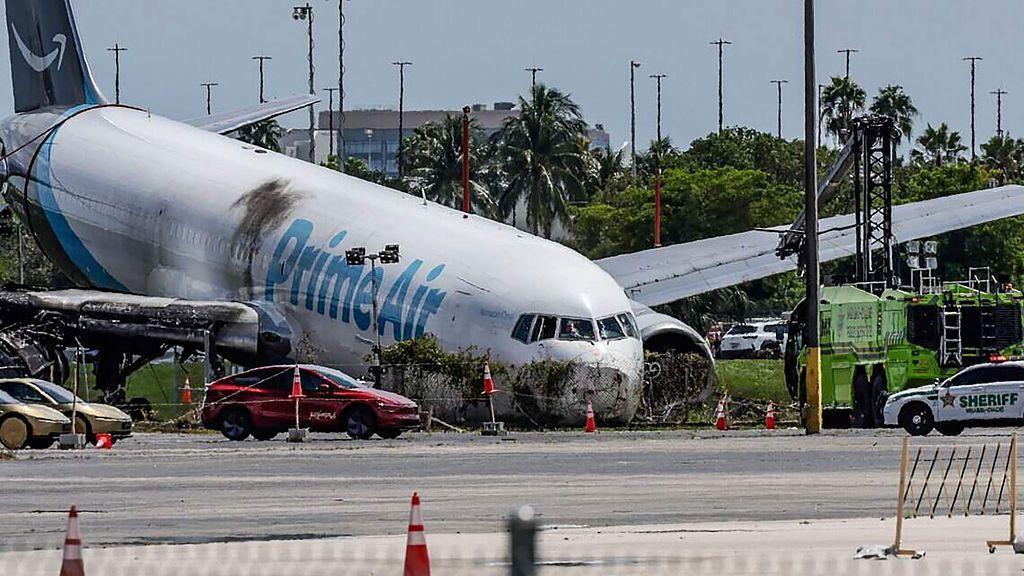
On Sunday, a Boeing 767‑300 cargo plane operating for Amazon Prime Air crash‑landed at Miami International Airport after it was traveling too fast, leading to an overrun, a collision with vehicular equipment, and a rooftop fire.
The National Transportation Safety Board’s latest investigation notes that pilot Richard Smith repeatedly warned co‑pilot Kyle Martinez about the “excessive speed” during final approach, but the cockpit’s verbal responses were inconsistent. An automated “sink rate” callout and a “too low terrain” warning were also logged.
Flight‑data recorders show the aircraft’s landing speed at 158 knots—on the upper end of acceptable limits. Additionally, flap deployment, which should have helped decelerate the aircraft, occurred late in the sequence, plausibly in response to the speed issue.
The crash resulted in five fatalities and injured five survivors. The dead–list included a plane‑cleaning crew that was stationed in a white Ford van on the apron when the aircraft overran the runway, slammed into the van and then onto a perimeter fence, collided with a Toyota Corolla, and finally came to rest 1,300 feet beyond the runway threshold.
Officials are now interrogating whether the pilot’s alarms and the automated warnings were sufficient, and what procedural steps could prevent similar oversupplies by other cargo aircraft. The NTSB continues to work with Amazon and the Federal Aviation Administration to refine air‑traffic safety protocols.
