
In brief
Prime Minister Tarique Rahman’s first overseas trip cemented a pivot to China, with agreements on a specialised‑economy zone and Teesta River management. While India’s ties with Dhaka are slowly thawing—re‑opened bus services and a resumed Friendship Pipeline—China’s role raises security concerns around the Siliguri Corridor. Bangladesh now must balance attracting Chinese investment with maintaining a vital partnership with its neighbour, amid lingering issues such as disputed immigration and the presence of former PM Sheikh Hasina in Delhi.
Bangladesh’s new government, led by Prime Minister Tarique Rahman, is steering the country toward China for major investments while signaling a renewed, although cautious, engagement with India.
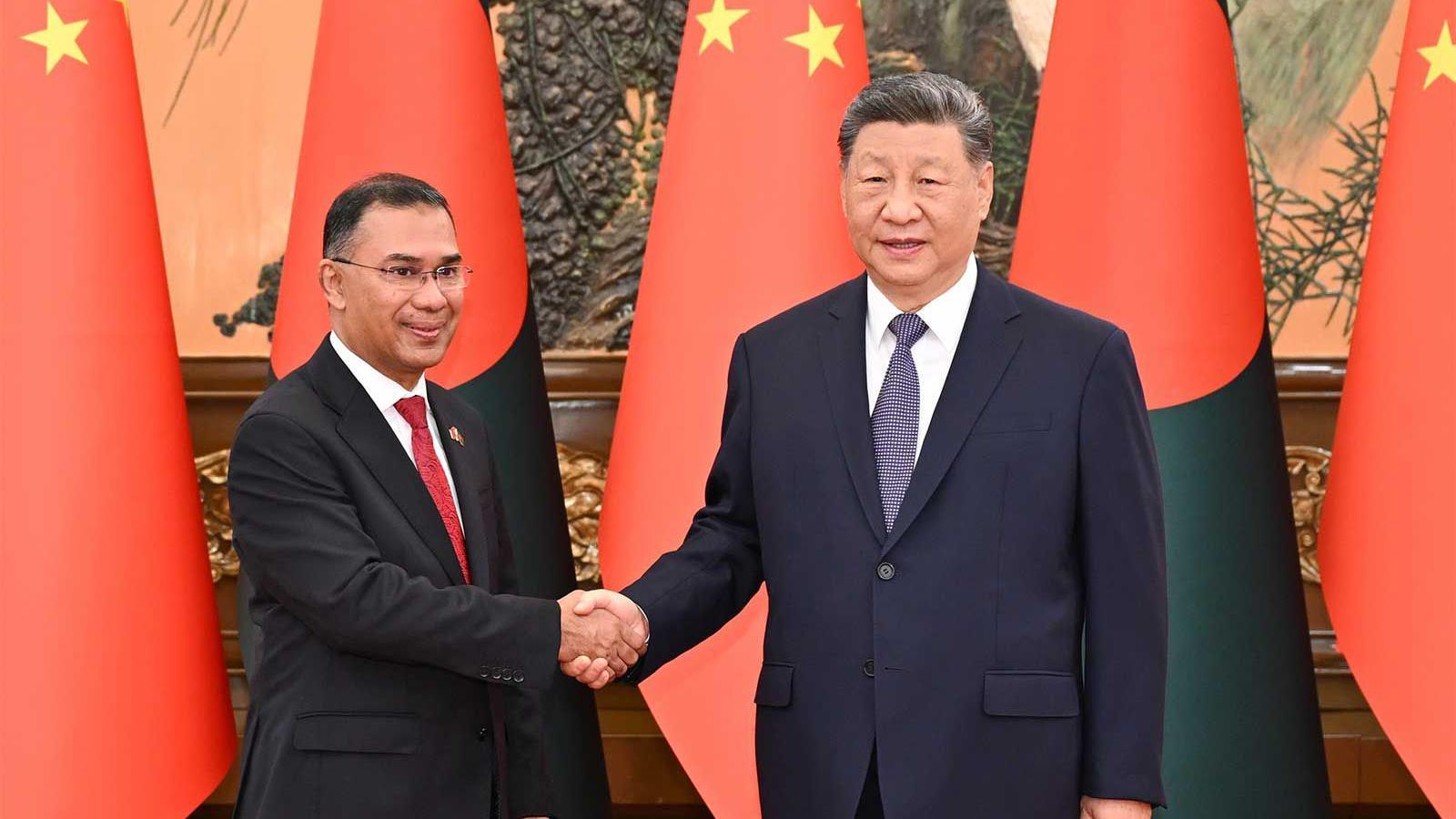
Bangladesh Prime Minister Tarique Rahman shakes hands with Chinese President Xi Jinping, signalling new economic ties.Rahman’s first foreign trip after the 2024 elections took him first to Malaysia and then to Beijing, underscoring a strategic pivot to China. China already supplies more than 70% of Bangladesh’s defence goods, and Beijing has agreed to help the nation build a special‑economy zone near the Mongla port and conduct a technical feasibility study on the disputed Teesta River.
Despite the change in leadership, ties with India—historically the default partner for new Bangladeshi governments—have started to thaw. High‑level visits resumed, the Friendship Pipeline was used again for fuel, and bus services between Kolkata and Dhaka and between Agartala and Dhaka reopened after an 18‑month break.
India remains wary of Chinese involvement in the Teesta project because the river’s flow crosses the Siliguri Corridor, a strategically critical stretch for the Indian mainland. Beijing’s spokesperson emphasized that China‑Bangladesh cooperation is “free from third‑party influence.” Meanwhile, the presence of former Prime Minister Sheikh Hasina in Delhi and India’s security concerns over unauthorized immigration at the border continue to strain the relationship.
Rahman now faces a delicate balancing act: securing Chinese investment to revive a stalled economy while keeping India as an indispensable neighbour for trade, security, and regional stability.
