
In brief
Following the Supreme Court’s refusal to consider a review of the civil case, writer E Jean Carroll’s lawyers have urged the judge to order former President Donald Trump to pay the $5.8 million judgment, including interest. The award stemmed from a New York jury’s verdict in May 2023 that found Trump sexually abused and defamed Carroll during a 1990s incident. Trump has repeatedly sought to delay payment, arguing procedural errors, but appeals at all court levels have been denied. Carroll’s team stresses the finality of the ruling, while the former president continues to deny the allegations on social media.
E Jean Carroll has asked Judge Lewis Kaplan to compel former President Donald Trump to pay the $5.8 million judgment, which includes accrued interest, after a New York jury found Trump liable for sexual assault and defamation in May 2023.
The demand follows the U.S. Supreme Court’s denial of Trump’s appeal to review the case, leaving no judicial recourse for the former president to stay out of court.
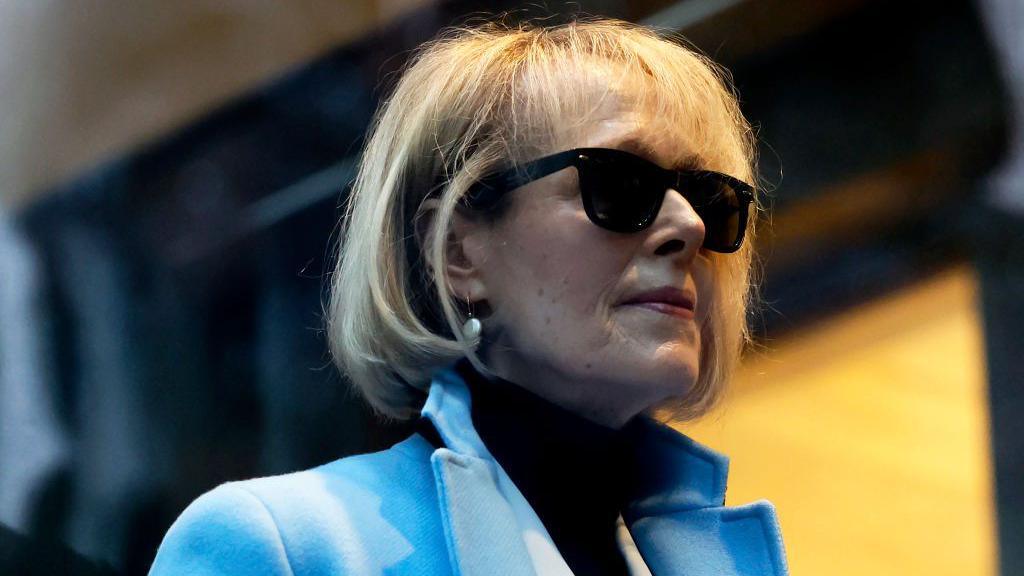
Carroll, now 82, accused Trump of assaulting her in the mid‑1990s in a Bergdorf Goodman dressing room and later misrepresenting the incident on Truth Social. The jury awarded her $5 million for the alleged abuse and $500 k for defamation, a figure that has grown to $5.8 million with interest.
Carroll’s lawyers cited Trump’s repeated attempts to delay payment and his insistence that Judge Kaplan’s decisions were defective. They argued that every effort Trump made to avoid the financial consequence has been rejected by the courts.
In a Truth Social post, Trump blasted the Supreme Court’s decision and vowed to continue fighting what he called “weaponisation” of the legal system. His appeal was dismissed by a federal appeals court last year following a jury verdict that upheld the jury’s findings.
The case showcases an unlikely intersection of legal precedent and political rhetoric, underscoring the enduring impact of the 1990s incident on both the public record and the headlines. Carroll’s latest filing signals the end of the litigation on this matter, leaving Trump with the choice to comply with the judgment or to continue contesting it in each available forum—though the Supreme Court’s refusal effectively closes that line of appeal.

