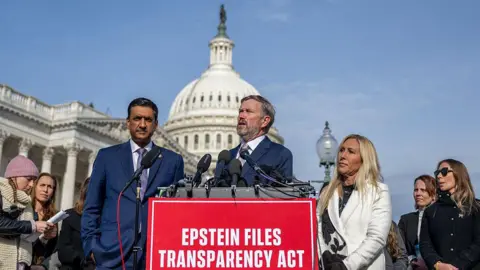
Both chambers of Congress agreed to order the US justice department to release its files on sex offender financier Jeffrey Epstein.
The House of Representatives overwhelmingly approved the measure in a 427-1 vote and the Senate unanimously fast-tracked it without a formal vote.
The moves come just days after President Donald Trump reversed his position and urged Congress to vote to disclose the records following public pushback from many of his supporters.
Last week, Trump and his ties to Epstein were thrust back into the headlines after more than 20,000 pages of documents - some mentioning the president - were released. The White House denied any wrongdoing.
Republican Clay Higgins, of Louisiana, was the sole House objector and cited his concern about “innocent people being hurt” with the release of the information.
Trump’s reversal from attacking those on Capitol Hill who wanted the files released to saying there was “nothing to hide” surprised some in Washington.
The Republican congressional leadership was caught off guard after aligning their message with the president for the past few weeks and opposing the release.
House Speaker Mike Johnson had repeatedly called the push to release the Epstein files a 'Democrat hoax'. On Tuesday, he voted in support of release.
The measure had been expected to take a few days to reach the US Senate, but after the resounding afternoon vote in the House, the timeline quickly sped up.
Senate Minority Leader Chuck Schumer brought up the bill on the floor of the Senate under a procedure called unanimous consent. Because no one objected, there was no debate and no amendments added to the bill.
It will head from the Senate to the president’s desk, where he is expected to sign it into law.
A congressional vote was not required to release the files - Trump could have ordered the release on his own.
The bill requires Attorney General Pam Bondi to release “all unclassified records, documents, communications, and investigative materials” related to Epstein and his co-conspirator Ghislaine Maxwell no later than 30 days after the law is enacted.
Those materials include internal justice department communications, flight logs and people and entities connected to Epstein. The bill also allows Bondi to withhold information that would jeopardize any active federal investigation or identify any victims.
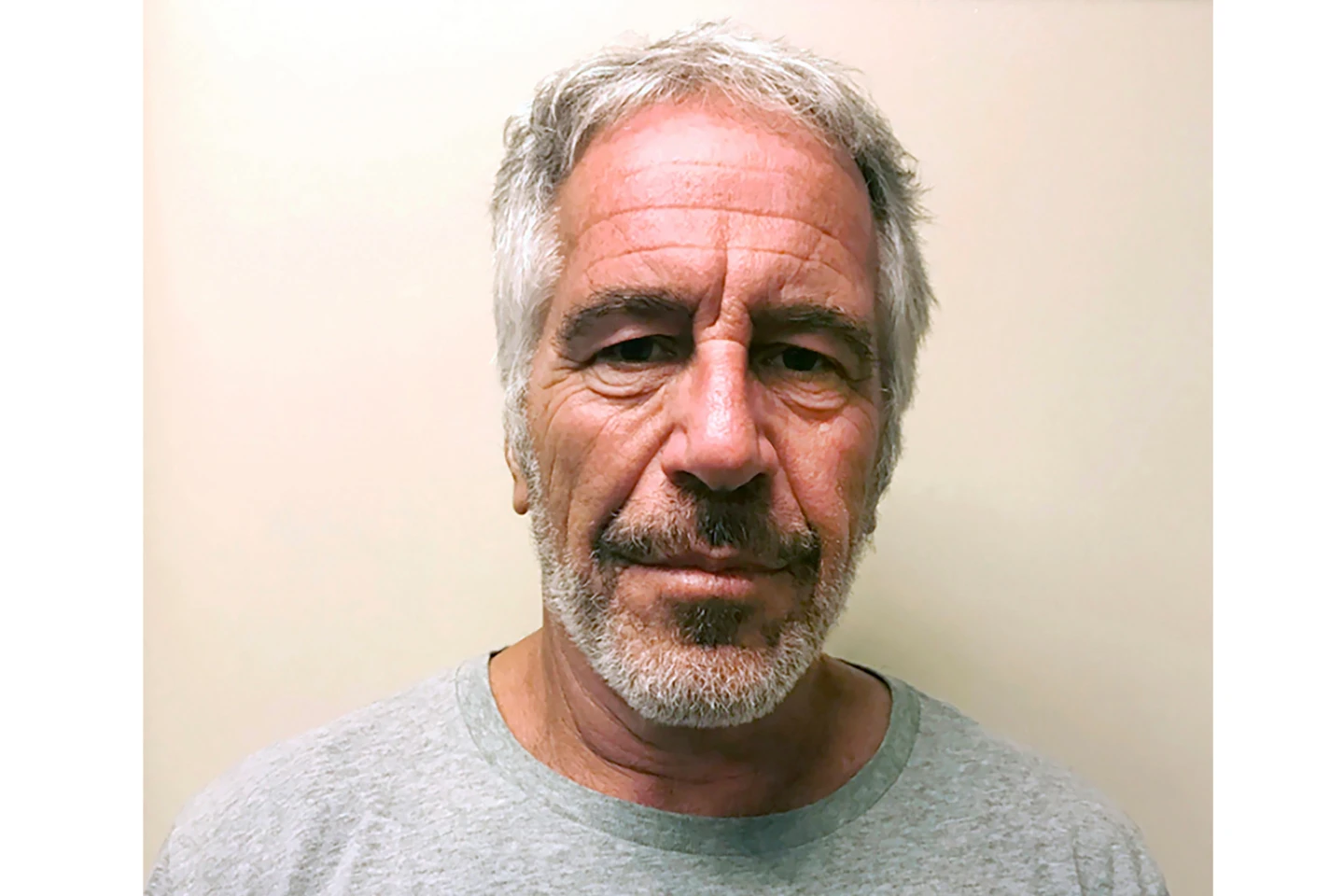
Epstein, a financier, was found dead in his New York prison cell in 2019 in what a coroner ruled was a suicide.
He was being held on charges of sex trafficking, having previously been convicted of soliciting prostitution from a minor in 2008.
During two criminal investigations into Epstein, thousands of documents were gathered, including transcripts of interviews with victims and witnesses.
Trump and Epstein previously socialized in similar circles, but the president said he cut ties with Epstein many years ago, before his 2008 conviction. The president also claimed he was unaware of Epstein’s criminal activity.
Last week, Democrats on the House Oversight Committee published three email chains, including correspondence between Epstein and Maxwell, currently serving a 20-year prison sentence for sex trafficking.
Some emails mention Trump, including one sent in 2011, where Epstein wrote to Maxwell: 'I want you to realize that that dog that hasn’t barked is Trump.. [VICTIM] spent hours at my house with him.'
The White House confirmed that the victim referenced in the email was prominent Epstein accuser Virginia Giuffre.
Giuffre, who died in April, has asserted she never witnessed Trump participating in any abuse, and there is no implication of any wrongdoing by Trump in the emails.
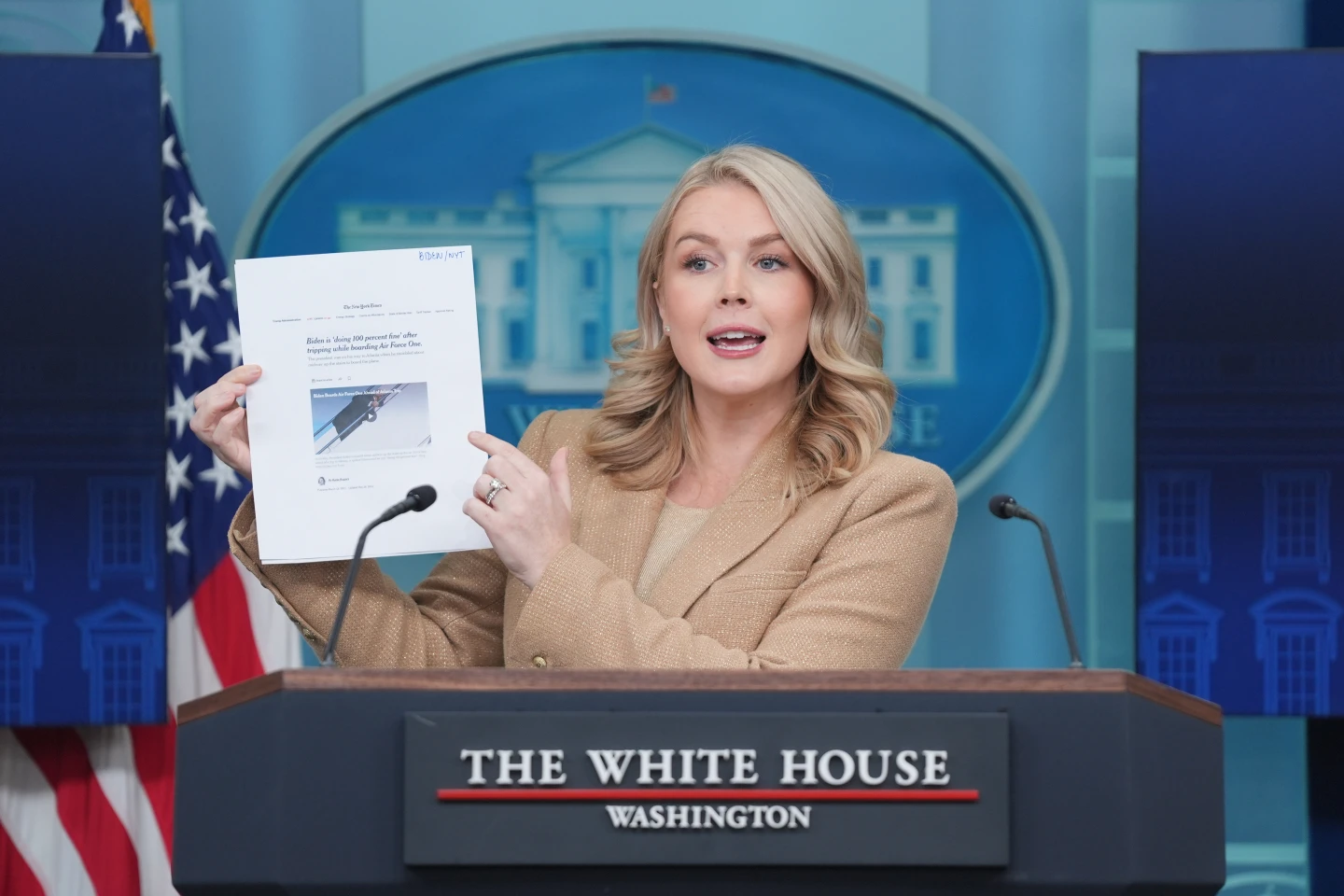
Trump has consistently denied any wrongdoing related to Epstein. White House Press Secretary Karoline Leavitt stated that the emails were 'selectively leaked' by House Democrats to create a false narrative against Trump.
The push for the release of the investigative files held by the Department of Justice was led by Republican Thomas Massie and Democrat Ro Khanna, both of whom introduced the legislation.
Massie has faced criticism from Trump for advocating the release of the files, but he maintains his stance.
“In 2030, he’s not going to be the president,” Massie said. He added that any Republicans who voted against release 'will have voted to protect paedophiles'.
Another Republican supporting the measure is House Representative Marjorie Taylor Greene, who has clashed with Trump over the issue, with the president labeling her a 'traitor'.
At a news conference, Greene emphasized her commitment to advocating for Epstein's survivors and called out Trump directly, stating,
'Let me tell you what a traitor is. A traitor is an American that serves foreign countries and themselves; a patriot is an American that serves the United States of America and Americans like the women standing behind me.'
Greene described the rift over Epstein as one of the 'most destructive things' to Trump's Make America Great Again movement since his election in 2016.
Survivors of Epstein’s abuse also urged lawmakers to release the files, with Epstein survivor Annie Farmer stating that keeping the files hidden translates to 'institutional betrayal.'
Farmer added, 'Because these crimes were not properly investigated, so many more girls and women were harmed.'