In brief
The Syrian rebel leader’s recent interactions with a woman during a photo opportunity have sparked debate over his leadership and the ideological stance of the group he represents, highlighting the challenges facing a diverse nation moving towards potentially conservative governance.
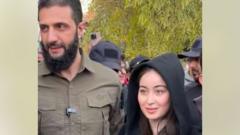
Syria's rebel leader, Ahmed al-Sharaa, has responded to the backlash stemming from a widely circulated photo of him with a young woman, Lea Kheirallah, in Damascus on December 10. Critics took issue with the incident after videos showed him gesturing for her to cover her hair before they took the photo. This sparked fierce discussions online, with commentators from various political spectrums voicing their concerns about the implications for Syria's future after the rebels' rise to power.Al-Sharaa, head of the Sunni Islamist group Hayat Tahrir al-Sham (HTS), defended himself by insisting that he did not force Kheirallah to cover her hair, stating, "It's my personal freedom." Kheirallah echoed this, expressing no discomfort, and described his request as made in a "gentle and fatherly way." However, the episode illustrates the complexities confronting any future leader in a nation marked by significant religious and ideological diversities.Syria is predominantly Sunni Muslim, but it is also home to Christians, Alawites, Druze, and Ismailis. The political and armed opposition to Bashar al-Assad consists of factions advocating for either a secular governance model or an Islamic law-based system. HTS, previously affiliated with al-Qaeda, had enforced strict behavior and dress codes following its capture of Idlib province in 2017 but has since relaxed these rules under public pressure.The Quran mandates modest attire for Muslims, which has led to different interpretations regarding appropriate dress for men and women, especially in mixed-gender settings. The tension between liberal expectations and conservative cultural values was evident, as many liberal commentators perceived al-Sharaa's actions as a troubling sign of an increasingly religiously-oriented governance system. Meanwhile, hardline conservatives criticized him for even posing with Kheirallah.Amidst the online uproar, some conservative figures condemned the photo as inappropriate and labeled Kheirallah a "mutabarijah," a derogatory term for women not adhering to conservative dress norms. Political attacks have also come from former HTS clerics, aligning religious dogma with their critique of al-Sharaa's leadership.As public discussions gain traction, the contrasting views reveal the deeper societal divides within Syria, raising questions about the potential future under HTS and the implications for women's rights and freedoms in a post-Assad era.