
In brief
The French government has offered a first concession to the nationwide student protest movement by promising 3,000 substitute teachers in the coming days. The move aims to address chronic teacher shortages that many argue fuel the current crisis over overcrowded classrooms and inadequate resources. While the decision is welcomed by some, student leaders say it falls short of the €10 bn they demand for comprehensive reform. The protests, which began last month, remain intense as political saturation rises ahead of the presidential election.
In a televised interview, Education Minister Edouard Geffray announced that 3,000 supply teachers will be dispatched across the country to ease the severe learning gaps and staffing shortages that have ignited a three‑week uprising among high‑school students. The plan is targeted at the roughly 500 lycées most in need, many of which are situated in high‑immigration suburbs where teacher absences have long been a problem.
Despite the government’s commitment, the promise has not satisfied the students. Objections from the Renouveau Lycéen union spokesman Nathanaël Combary were clear: “People want to see concrete results, not just symbolic gestures,” while the Union Etudiante’s Sabrine Kharbach warned that action will continue until at least €10 bn is added to the 2027 state budget for educational spending.
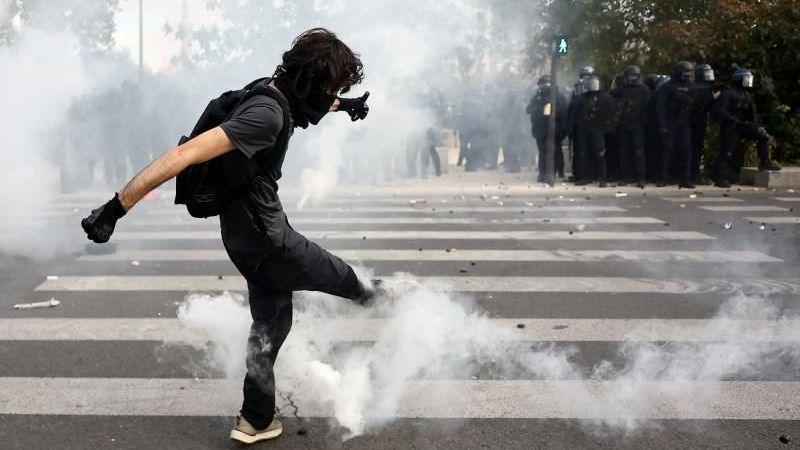
In the wake of these developments, the situation in Paris remains volatile. Police used tear gas to disperse demonstrators who retaliated with stones and homemade fireworks. In Bordeaux a lycée was ransacked, and a deputy‑head was beaten in Marseille, signalling the violence that has marked the movement’s most recent days.
The French government is keen not to appear as buying peace with money, cognizant of its fragile debt position that keeps international markets wary. Nevertheless, it has promised increased funding for teachers willing to work overtime hours and has assured that the student grievances will inform budgetary discussions ahead of the 2027 fiscal plan.
With half‑term holidays on the horizon and colder weather expected, officials hope that a lull will ease the pressure on institutions. Yet the political landscape is fraught: the National Rally brandishes the protest’s violence as a negative signal, while left‑leaning parties laud the demonstration as a reclaiming of public space. The forthcoming presidential elections in April and May add another layer of tension, as far‑right and far‑left forces seek to galvanise support through demonstrations such as the newly planned “yellow vest” rallies on 17 October.


