From Birthplace to Police HQ: Braunau Hoists a New Legacy
In the small Austrian town of Braunau am Inn, the 13‑year‑old house that once marked Adolf Hitler’s first cry has been repurposed into a police station, a symbolic attempt to erase a dark chapter and re‑frame the building as a bastion of law and liberty.
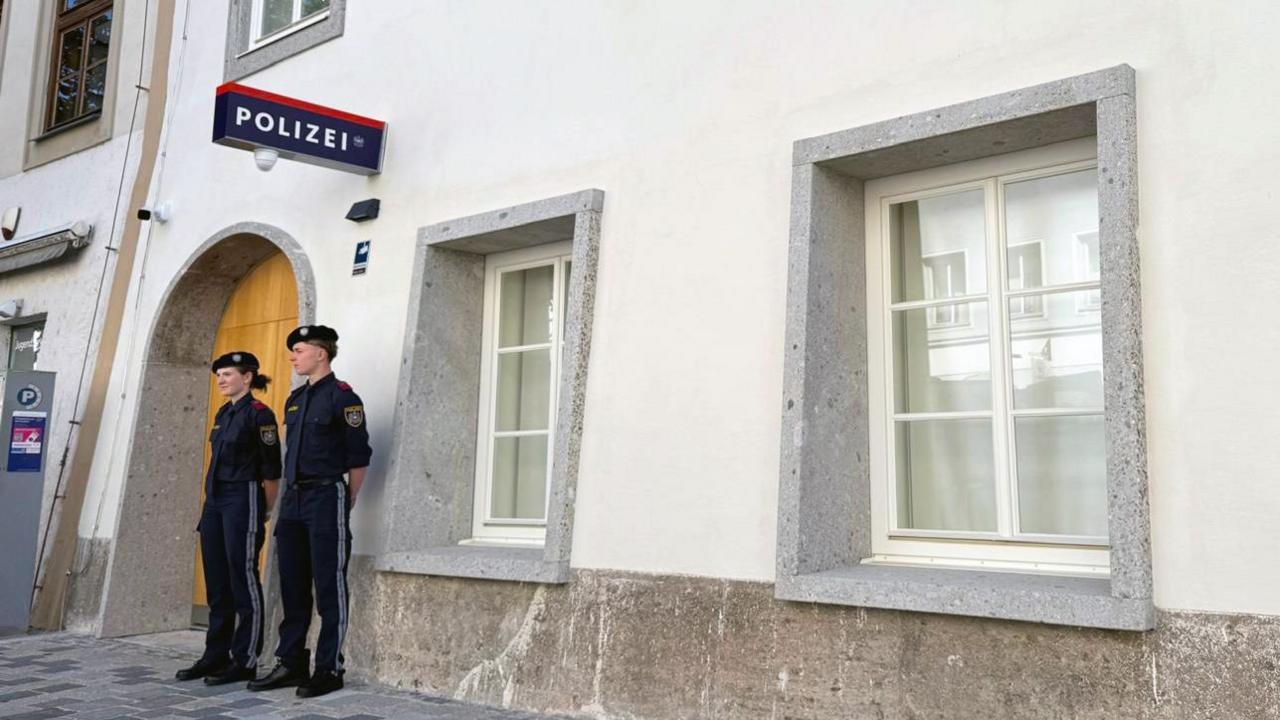
The former inn—now a brick- and white‑washed structure with a prominent police sign—was refurbished and opened to the public on Wednesday. Two police officers, surrounded by brass instruments, welcomed the crowd during a ceremony attended by Interior Minister Gerhard Karner, who described the move as a “new chapter” for the site.
Karner said the building would now “be a place of democracy, rule of law, security, freedom and human dignity.” A Catholic police chaplain even blessed two crosses that will hang in the department, underscoring the ministry’s commitment to a secular, anti‑extremist role for the premises.
The change follows years of controversy. A local charity had used the ornate 17th‑century inn as a day centre for people with special needs, but in 2011 negotiations stalled when property owner Gerlinde Pommer blocked interior renovations and refused to sell. After a 2016 parliamentary law allowed the state to seize the house, the government paid Pommer €812,000, a sum she challenged in court but ultimately accepted.
While the white‑washed building now boasts gleaming oak interiors and a preserved winding staircase, critics argue that converting the house into a police station may send the wrong message about confronting Austria’s Nazi past. Local historian Florian Kotanko lamented that the site “never goes away” and that new visitors—whether neo‑Nazi sympathisers or curious historians—cannot be entirely deterred.
Notably, the building’s history is not openly commemorated. No signs inside or outside indicate its past, and the only visible reminder is a stone erected in 1989 across the street that reads, “Never again Fascism; In memory of millions of dead.” The stone, sourced from a former Mauthausen concentration camp, harks back without naming Hitler himself.
The decision to house the police department in this timeless building illustrates Austria’s cautious approach to balancing remembrance with progression. Though many residents hope for a memorial space that confronts the Nazi legacy, the new police station promises a bold statement: the past is acknowledged, but the present is dedicated to safety, law, and democratic resilience.