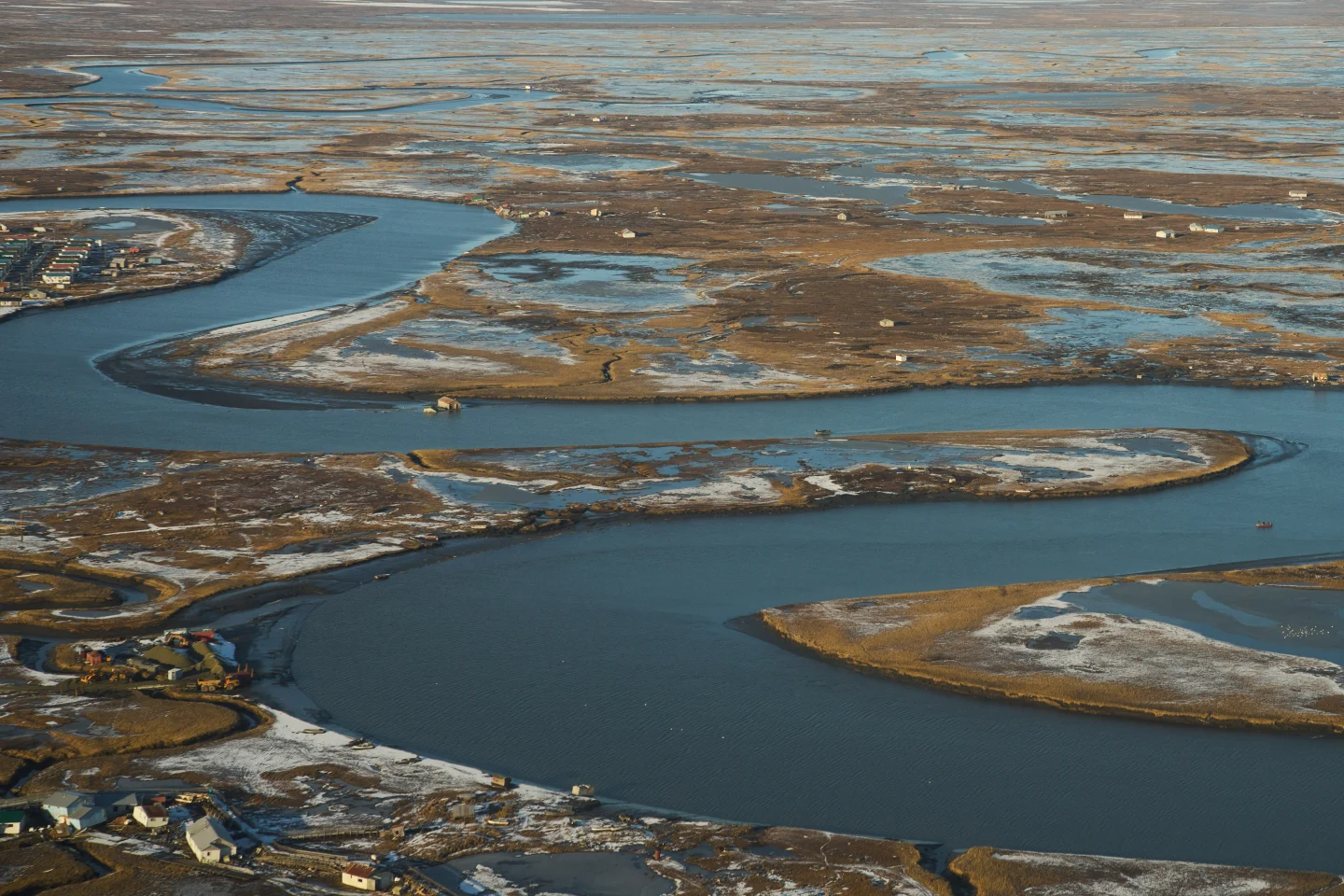
As climate change accelerates, the Arctic village of Tuktoyaktuk is witnessing the alarming effects of thawing permafrost, posing existential challenges for its Indigenous residents. Situated along the shores of Lake Tiktalik, the once-stable ground has now given way to significant geological changes, with landslides creating expansive craters in the tundra.
While young community members, such as 17-year-old Jaden Cockney, work with elders like 69-year-old William Dillon to document these changes, the urgency of their findings reflects a harsh reality. Historically, the permafrost lay just a few inches beneath the surface; however, rapid thawing is pushing it deeper underground, threatening to undermine the very foundation of Tuktoyaktuk.
For the Inuvialuit—Canada's Inuit community in this region—the shift in climate represents not merely a challenge but potentially the loss of their ancestral home, making them the country's first climate refugees. As they confront rising sea levels and the relentless encroachment of the Beaufort Sea, tough discussions about the timing and logistics of relocation loom large.
Dillon, who has monitored the environmental changes for over three decades, volunteers with the Tuktoyaktuk Community Corporation, where he aims to gather data that highlights the severity of the situation. As erosion along shorelines continues, the community already knows the need to move is inevitable, but significant discrepancies in opinion arise regarding when this transition should take place.
The future of Tuktoyaktuk hangs in the balance as its residents strive to reconcile their cultural ties to the land with the pressing demands of climate resilience, turning to local leaders for guidance on navigating this unprecedented crisis. The question remains: how long will the ground beneath their feet hold as global and local factors converge in this Arctic haven?