
In brief
After the May NEET‑UG exam was cancelled because of alleged paper leaks, Indian authorities tightened security to an unprecedented level. Biometric checks, metal detectors, CCTV, drones and jammers were deployed across 5,440 centres, and the Indian Air Force moved new exam papers by helicopter to safeguard the process. Despite these precautions, students remain anxious as the test, scheduled for June 4, carries enormous stakes for medical careers. This security drama echoes previous controversies over exam fraud in India. Key points: — 5,311 jammers blocked phone signals. — 1.3 million cameras installed. — 39,000 frisking staff. — Telegram temporarily banned. — The exam‑paper was transported by air force. The incident underlines the intense pressure on Indian academic examinations and the government’s efforts to maintain fairness.
Millions of hopeful medical students across India are resitting a crucial exam under unprecedented security after the first paper was cancelled following allegations that the questions had been leaked.
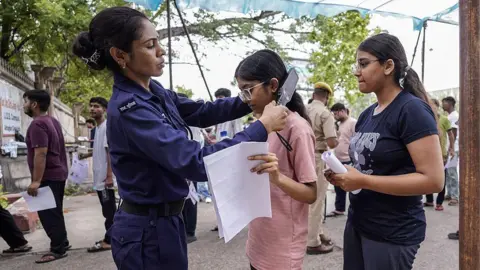
Nervous students were greeted with biometric identification checks, metal detectors, armoured patrols and frisking at exam centres on Sunday morning.
Legitimate threat‑management measures included the Indian Air Force transporting new exam papers to some regions, while police and paramilitary officers were deployed at the 5,440 exam centres across the country.
The National Eligibility cum Entrance Test (Undergraduate) or NEET‑UG is the gateway for students to join medical colleges in India, demanding that only a small percentage of candidates secure coveted placements.
Nearly 2.28 million candidates sat the exam on 3 May, having studied for months, or even years, for the notoriously difficult paper.
The decision to scrap the exam midway for a suspected leak was devastating. It sparked widespread protests and demands for the Education Minister to resign.
The National Testing Agency (NTA) installed more than 1.3 million cameras across exam rooms, and 51,311 jammers were used to block phone signals and other electronic signatures. Telegram was temporarily banned to prevent illicit coordination.
Some 39,000 frisking staff were employed across the country, and 40‑50 security personnel were stationed at every exam centre.
Students were advised to ignore rumours of paper leaks spread on social media, with official statements stressing that they were designed only to create stress.
Despite security measures, students expressed lingering anxiety. “There is fear because the paper has leaked once already. This is not a one‑off thing, it happens every year,” one said, describing the high emotional stakes.
The mobile testing centre’s strict dress codes included banning enclosed shoes and asking women to remove nose pins and wrist threads. Security personnel inspected hair and jewellery before exam time.
The physico‑chemistry‑biology exam runs for three hours and 15 minutes, with 180 questions. The exam’s difficulty level sees many students rely on private tutoring, but crime networks have tried to profit from exam fraud.
Leak allegations are under investigation by India’s Central Bureau of Investigation (CBI). In 2024 the same medical test faced allegations of paper leaks, fraud and irregularities, and earlier this year the grading of a Grade 12 exam drew complaints over digital marking errors.


