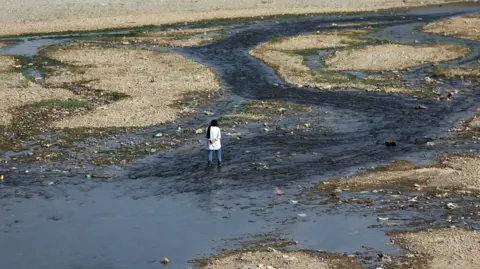
Iran - especially its capital, Tehran - is facing an unprecedented drought this autumn, with rainfall at record lows and reservoirs nearly empty. Officials are pleading with citizens to conserve water as the crisis deepens.
President Masoud Pezeshkian has warned that if there is not enough rainfall soon, Tehran's water supply could be rationed. But he said that even rationing might not be enough to prevent a disaster.
If rationing doesn't work, Pezeshkian said, we may have to evacuate Tehran. His comments have prompted criticism in Iranian newspapers and on social media. Former Tehran mayor Gholamhossein Karbaschi called the idea a joke and said evacuating Tehran makes no sense at all.
Iran's meteorological officials say no rainfall is expected over the next 10 days. Meanwhile, the water crisis is already affecting daily life in the capital. I'm planning to buy water tankers to use for toilets and other necessities, a woman in Tehran told BBC Persian.
The manager of the Latian Dam, one of Tehran's main water sources, states it now holds less than 10% of its capacity. Nearby, the Karaj Dam is in a similarly dire condition. With a dramatic 92% decrease in rainfall compared to last year, Tehran and cities like Mashhad are facing severe water challenges.
Iran's energy minister Ali Abadi has blamed water leakage from the aging infrastructure and pointed to complications resulting from recent conflicts. The crisis extends beyond Tehran, with alarming reports about water levels in provinces like Khorasan Razavi, where dams hold less than 3% capacity.
Iran's water crisis, rooted in decades of mismanagement and recurring droughts, threatens the lives of millions, leaving the nation scrambling for viable solutions amid ongoing water shortages.