
In brief
In a dramatic turn of events following the Louvre theft, two suspects in their thirties have partially confessed to their role in the heist. Arrested after using power tools to break into the museum, the men are linked to a larger gang possibly involved in the theft of items valued at €88 million. Prosecutor Laure Beccuau confirmed that the stolen jewels have not yet been recovered, and investigations are ongoing to uncover any additional accomplices. Security measures at the Louvre have since intensified.
Two men arrested in connection with the Louvre theft two weeks ago have 'partially recognised' their involvement in the brazen heist, according to officials.
The pair in custody are suspected of being the two who used power tools to enter the museum's Apollon gallery and steal some of the French crown jewels.
Items worth €88m (£76m; $102m) were taken from the world's most-visited museum on 19 October, when four thieves broke into the building in broad daylight.
Paris prosecutor Laure Beccuau mentioned that the jewels had not been recovered, and the gang involved could be larger than the four suspects caught on CCTV.
The two men, both in their thirties, have criminal records and were identified by DNA found during investigations, Beccuau said. One of the men was arrested while attempting to board a one-way flight to Algeria, whereas the other had no apparent plans to leave France.
There is currently no evidence pointing to an inside job, confirming that no museum staff were complicit in the theft.
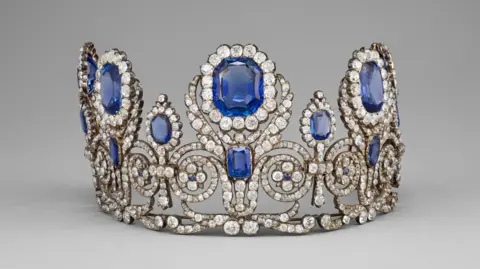
Beccuau expressed hope for the recovery of the jewels and mentioned that a crown, once owned by Empress Eugenie, was dropped by the thieves and is undergoing damage assessment.
On the day of the heist, the robbers arrived at 09:30 (08:30 GMT) just after the museum opened, using a stolen vehicle-mounted lift to access the Galerie d'Apollon. They utilized a disc cutter to open display cases housing the jewels and escaped within minutes using scooters.
No visitors were threatened during the heist, and security measures at national cultural institutions have since been strengthened. Following the incident, the Louvre has moved its most valuable jewelry to a secure vault in the Bank of France, 26m below ground.