
In brief
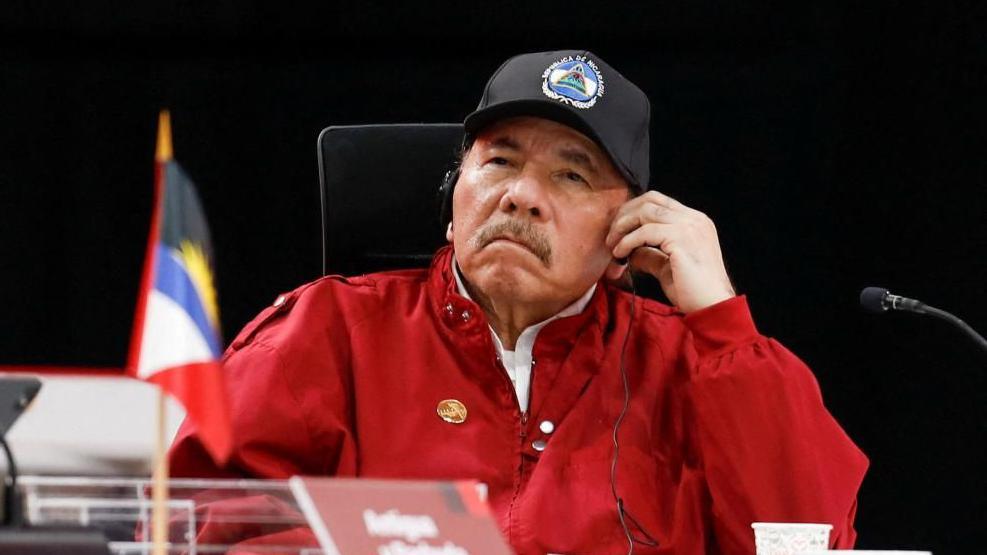
Nicaragua’s government‑controlled National Assembly is set to vote on a proposal that would bar opposition parties from future elections, following President Daniel Ortega’s hardline public statements. The Premier’s remarks have drawn condemnation from the UN, US officials and human‑rights activists, who warn that the move would undermine democratic participation. Ortega, who has ruled since 2007, has systematically restricted political dissent through imprisonment, exile and citizenship revocations. The potential ban marks a further tightening of power as the country moves toward a six‑year presidential term and a co‑presidency with his wife, Rosario Murillo. Opposition figures in exile view the legislation as a pivot toward an authoritarian one‑party state.
By Vanessa Buschschlüter – Published 38 minutes ago
The National Assembly is poised to decide whether opposition parties can run in the next election, with a vote likely scheduled for the first week of August.
The proposal follows President Daniel Ortega’s declaration that there will be no more electoral contests for the opposition, a statement made just days before the Assembly’s deliberations. In a speech that marked the anniversary of the 1979 Sandinista revolution, Ortega warned that “lenders” from the United States were coordinating attempts to seize governmental power through elections.
The remarks met swift rebuke from the United Nations Human Rights Commissioner Volker Türk, who spoke out that people representing a spectrum of political viewpoints must be allowed to vote and run for office. US Secretary of State Marco Rubio added that Ortega and his wife, Rosario Murillo—who was named “co‑president” in February 2025—had “abandoned the pretense of popular consent.”
Ortega’s tenure, which began in 2007, has gradually hardened into authoritarianism, characterized by the imprisonment, exile and citizenship revocation of opposition figures. The last presidential elections, held in November 2021, were a single‑party contest with Ortega’s triumph following a brutal crackdown on rivals.
The National Assembly has, for the past year, debated measures that would strip the opposition of even a single foothold in the political arena. The proposed legislation would establish a “wall” to block any chances for a coup, according to the Assembly’s chief Gustavo Porras, as reported by the government‑aligned outlet Muymag.
For the opposition, the prospect of their exclusion from parliamentary and presidential ballots is seen as a forced drift toward a one‑party regime. Exiled politicians such as Juan Sebastián Chamorro and former presidential candidate Felix Maradiaga decried the plan as evidence that the regime is preparing to mirror the authoritarian models of China, North Korea, and Cuba.
The debate underscores a stark reality: with repression, violent suppression of protests in 2018 and a record of silencing dissent, very few Nicaraguans speak openly against the Ortega‑Murillo administration. The legislative stride marks a deepening of the authoritarian narrative and sets the stage for a political environment where elections are potentially ceremonial at best, and participatory at worst.
