
In brief
Ukrainian President Volodymyr Zelensky has firmly rejected European leaders' suggestions to establish a 40km buffer zone to facilitate peace amid the ongoing conflict with Russia. Emphasizing the impact of drone warfare, he stated that a 'dead zone' already exists due to the threat of drone strikes, negating the need for a formal buffer. As diplomatic efforts continue to stall, Zelensky maintains that any negotiations must not require Ukraine to relinquish territory.
Ukrainian President Volodymyr Zelensky has rejected proposals for a buffer zone between Ukrainian and Russian forces as part of a peace deal, arguing it does not reflect the realities of modern warfare.
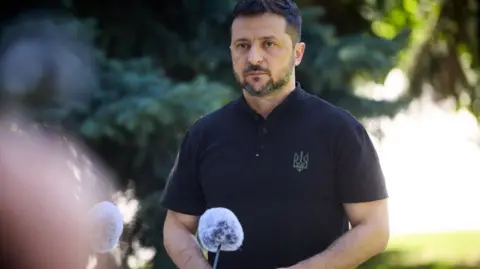
Only those who do not understand the technological state of today's war propose a buffer zone, he told reporters on Friday.
His comments came in response to a report suggesting European leaders were considering a 40km (25-mile) buffer zone as part of either a ceasefire or a long-term agreement.
The war in Ukraine has evolved into a conflict driven by drone technology, and Zelensky indicated that a buffer zone of sorts already existed due to the threat of drone strikes close to the front line.
Today, our heavy weapons are located at a distance of more than 10km from each other because everything is hit by drones, he shared. This area, he referred to as a 'dead zone' or 'grey zone', is effectively a buffer created by the nature of the warfare.
Moreover, any proposed arrangement would potentially require Ukraine to relinquish territory within this zone, which Zelensky has resolutely opposed: If Russia wants to have a greater distance from us, they can retreat deep into the temporarily occupied territories of Ukraine.
Zelensky asserted that Russia was not yet prepared for genuine diplomacy, instead aiming to prolong the conflict.
Current diplomatic efforts led by the US to resolve the ongoing war seem to be losing momentum, with a recent high-stakes meeting between US President Donald Trump, Zelensky, and various European leaders not achieving its intended outcomes. German Chancellor Friedrich Merz noted that a meeting with Putin was obviously not on the table.
In a coordinated response to attacks, including a significant drone strike that resulted in 23 fatalities in a major assault on Kyiv, European leaders—including France's Macron and Germany's Merz—are considering enhanced military support for Ukraine as pressure on Russia mounts.
EU foreign policy chief Kaja Kallas described Russia’s continued assaults on civilians as deliberate escalations undermining peace efforts.
Zelensky's chief of staff, Andriy Yermak, has been engaging with US peace envoys, noting, however, that Russia is currently stalling any potential agreements. European nations are considering security guarantees for Ukraine as they seek to bolster support and protection amidst ongoing negotiations.


