
In brief
Newly inaugurated President Abelardo de la Espriella tackled the resurgence of armed groups in Colombia after the death of the dissident Farc-based commander Hernando Forero Mosquera, known as “el ruso.” The military operation, part of a broader crackdown on illegal armed groups, killed Mosquera and five others, sending a warning to insurgents across the country. De la Espriella vowed to end narco‑terrorism with air strikes and force, drawing support from the U.S., while his predecessor Gustavo Petro’s peace‑oriented strategy failed to curb violence. The incident highlights the continuing threat of cocaine trafficking, illegal mining, and drug cartels that fuel Colombia’s conflict.
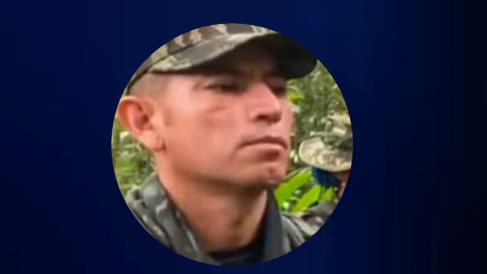
Hernando Forero Mosquera, a suspected leader of a faction split from the Revolutionary Armed Forces of Colombia (Farc), was killed in a central Colombia military operation. The move follows President Abelardo de la Espriella’s resolve to target illegal armed groups in his first days in office.
De la Espriella, sworn in on Friday, vowed a “clear and powerful message” to rebel factions that no region offers refuge, and he has already announced air strikes against narco‑terrorist cells.
Forero Mosquera was identified by military intelligence as head of Frente 28, one of several dissenting factions that broke away from the Farc peace accords of 2016. These groups now largely profit from cocaine trafficking, illegal mining, and are a major source of renewed violence in Colombia.
The former president’s combative strategy stands in stark contrast to his predecessor, Gustavo Petro, who pushed a “total peace” strategy favoring negotiation. Petro’s peace talks collapsed when rebels repeatedly violated ceasefires.
After de la Espriella’s inauguration, the country saw a pair of explosive attacks: a car bomb at a tollbooth in Cauca that injured security guards, and a drone‑delivered bomb in Cesar province killing a police officer.
In an official video, de la Espriella lauded the military’s success in eliminating Mosquera, described the victim as an explosives expert, and noted the killing of three more suspected members of the same faction in Meta province. He also highlighted operations that eliminated two alleged Gulf Clan members in Antioquia.
The U.S. has signalled robust support: President Donald Trump endorsed de la Espriella, the State Department pledged $1 billion of security assistance, and the new administration was welcomed into the Shield of the Americas, a U.S.‑led alliance targeting drug trafficking and transnational crime.
The volatile situation remains a reminder of Colombia’s ongoing conflict and the difficulty of reconciling strong security measures with durable peace agreements.

