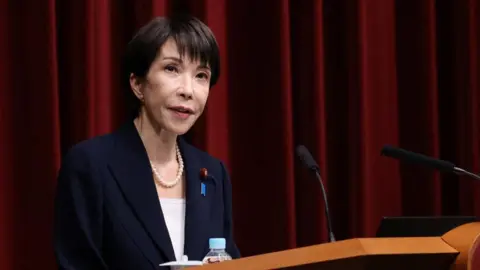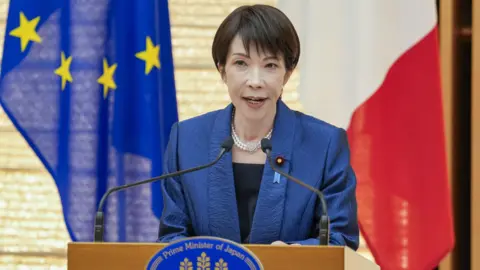
Japan's Prime Minister Sanae Takaichi is among some 60 female lawmakers petitioning for more women's toilets in the parliament building to match their growing representation in the legislature.
A record 73 women were elected into the 465-seat Lower House in October 2024, exceeding the previous high of 54 in 2009.
One opposition lawmaker, Yasuko Komiyama, stated there are often long queues in front of the restroom... before plenary sessions start, and quoted another MP who said she had given up going to the toilet before a session began.
Currently, there is only one female toilet with two cubicles near the plenary chamber, while the entire building has nine toilets with a total of 22 cubicles. In contrast, there are 12 men's toilets with 67 stalls and urinals across the building.
Please note, the situation is often inconvenient as female staff and visitors share the toilets, emphasizing the need for more facilities. Komiyama plans to advocate for a future where women hold more than 30% of parliamentary seats.
The parliament building, constructed in 1936, predates women's suffrage in Japan, which was granted in 1945. With the building's large size, it fails to adequately provide for the increasing number of women present.
If the administration is serious about promoting women's empowerment, I believe we can count on their understanding and cooperation, Komiyama expressed.
Chairperson of the Lower House committee, Yasukazu Hamada, has shown willingness to consider proposals for more women's toilets, signaling potential positive changes ahead.
Despite Japan's government aiming for women to hold 30% of leadership roles by 2020, progress has stagnated, as women currently hold nearly 16% of the Lower House and about a third in the Upper House.
Prime Minister Takaichi, the first woman to lead Japan, pledged to improve gender representation but has made limited progress with her cabinet appointments, including only two women in a 19-member team. The emphasis on women's facilities extends beyond parliament to the nationwide issue of long lines for women's public restrooms.
Former Prime Minister Shigeru Ishiba previously recognized the need to enhance women's restroom facilities to foster a comfortable societal atmosphere for women.