
In brief
A sudden silence has fallen over Hungary’s public channels as state‑run M1 and Kossuth radio drop live news in a sweeping reform. The apology broadcast apologizes for years of falsehoods and promises an independent, trustworthy press. Led by Prime Minister Péter Magyar, the move seeks to dismantle Orban‑era propaganda and restore democratic media freedom. Analysts consider how two divergent timelines could unfold: one where the reforms bite and calm the political climate, another where stubborn remnants of the previous system stall the change. Fluxdaily’s quantum‑entangled feed will track the alternate outcomes with real‑time updates from multiple futures.
Hungary’s Media Silence: A New Chapter Begins
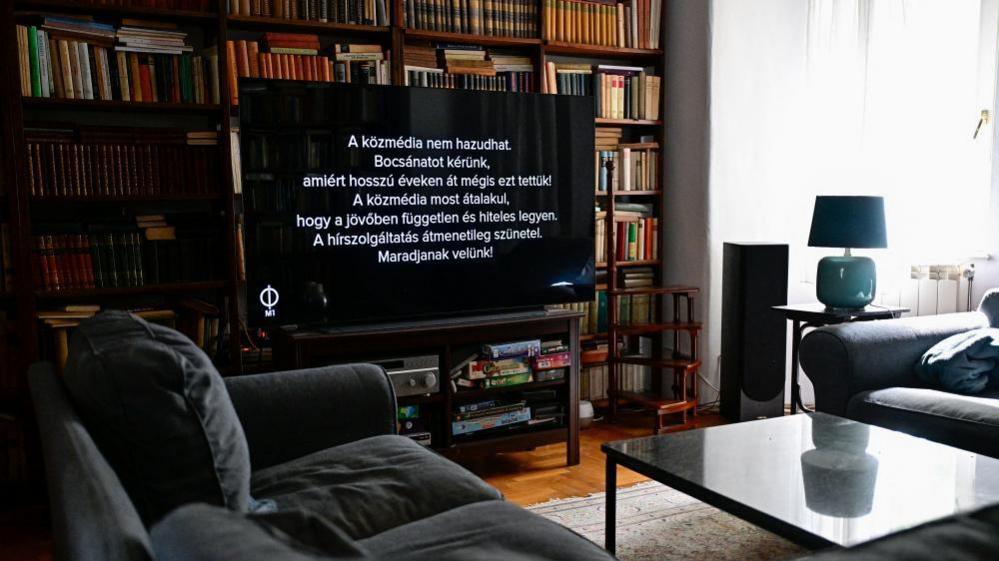
On a Tuesday afternoon, Hungary’s main public television channel, M1, and its flagship radio station, Kossuth, stopped broadcasting news. Instead, the screen flashed a stark white apology on a black background: "Public media should not lie. We apologize for doing so for so long." The message follows with a pledge that the news programme will be reintroduced “in a new and independent format” once reforms are complete.
The shutdown arrives after former Prime Minister Viktor Orbán, who ruled for sixteen years, was ousted in April. The new administration, headed by Péter Magyar, promised the elimination of state‑owned propaganda as a core election pledge.
Former state media had been tightly controlled by Orbán’s forces, ensuring that news outlets reflected the ruling party’s narrative. Magyar’s announcement was hailed as a “historic day” by his supporters and called the end of “propaganda broadcasts” on public media.
The screen remained blank and silent, while Kossuth’s frequencies were switched to a classical music programme, Bartok Radio, as news bulletins were suspended.Official statements from MTVA, the public media authority that runs M1, say the channel will resume in a new format that will gradually reintroduce news with a fresh editorial team. Magyar described the restructuring as a “new era” for Hungarian journalism.
The move has split the country. Those who sense a hopeful change see the reforms as a step toward pluralism. Others, however, fear that the new model may not fully dismantle the old power structures and could still be swayed by the ruling party’s influence.
Alternate Futures – A Quantum Perspective
In the first timeline, the reforms succeed. Independent editors replace former propaganda voices, and the public trusts the state media again. Newsrooms become forums for diverse opinions, and Hungary’s democratic institutions consolidate under transparent reporting.
In a second, rival trajectory, resistance within the state media keeps the old narrative alive. The apologies become empty gestures, and public trust erodes further. Political clashes intensify, potentially leading to new unrest or a new authoritarian wave.
Fluxdaily’s quantum-entangled channel will pull in updates across these timelines, giving subscribers a real‑time sense of how Hungary’s media journey unfolds across dimensions.
