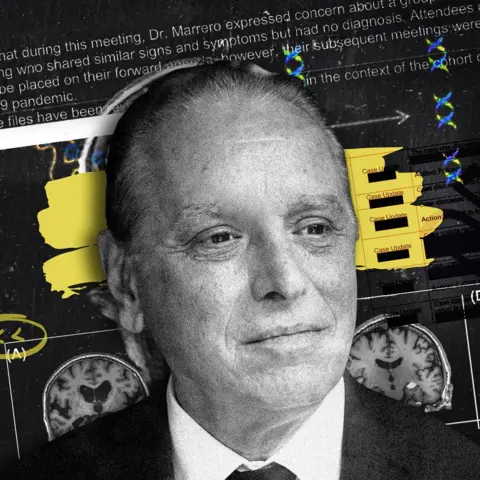
In early 2019, a cluster of cases arising from a rare brain disease known as Creutzfeldt-Jakob Disease (CJD) raised alarms in New Brunswick. What began as concerns over the health of two patients spiraled into a much larger investigation of up to 500 cases of a similar condition characterized by a baffling array of symptoms affecting predominantly younger people.
Dr. Alier Marrero, a neurologist who witnessed the alarming rise in cases, initially reported these mysterious ailments to Canada’s CJD Surveillance System, but results consistently returned negative. Patient after patient presented a plethora of troubling symptoms ranging from insomnia and hallucinations to spasms and cognitive decline, leading many to wonder if there was a yet unidentified illness akin to CJD.
Over time, the issue ignited a passionate debate surrounding labeling patients as part of a 'mystery illness' versus acknowledging they had existing neurological conditions. In recent discourse, a bombshell research paper emerged asserting that the ailments reported by these patients were misdiagnosed neurodegenerative or psychiatric conditions rather than indicative of a singular, new illness.
Despite the scientific pushback, the patients, buoyed by Marrero's dedication, stand firm, many claiming that environmental toxins or industrial pollutants are responsible for their collective health crisis. Yet, lacking definitive proof stifles progress and fuels distrust in health authorities.
As investigations by the government's oversight committee concluded there emerged no common environmental cause or new condition among the patients, underlining the complications of scientific investigation when intersecting with human lives and suffering.
While patients like Jillian Lucas confront the prospect of assisted dying amidst their struggles for a clearer diagnosis, the medical community remains divided, illustrating a complex interplay of personal advocacy, bureaucratic responses, and a lingering search for truth, accuracy, and closure.
With the government's report on the impacts of toxins forthcoming, the narrative surrounding the New Brunswick neurological syndrome continues to evolve, challenging our understanding of diagnosis and patient care.