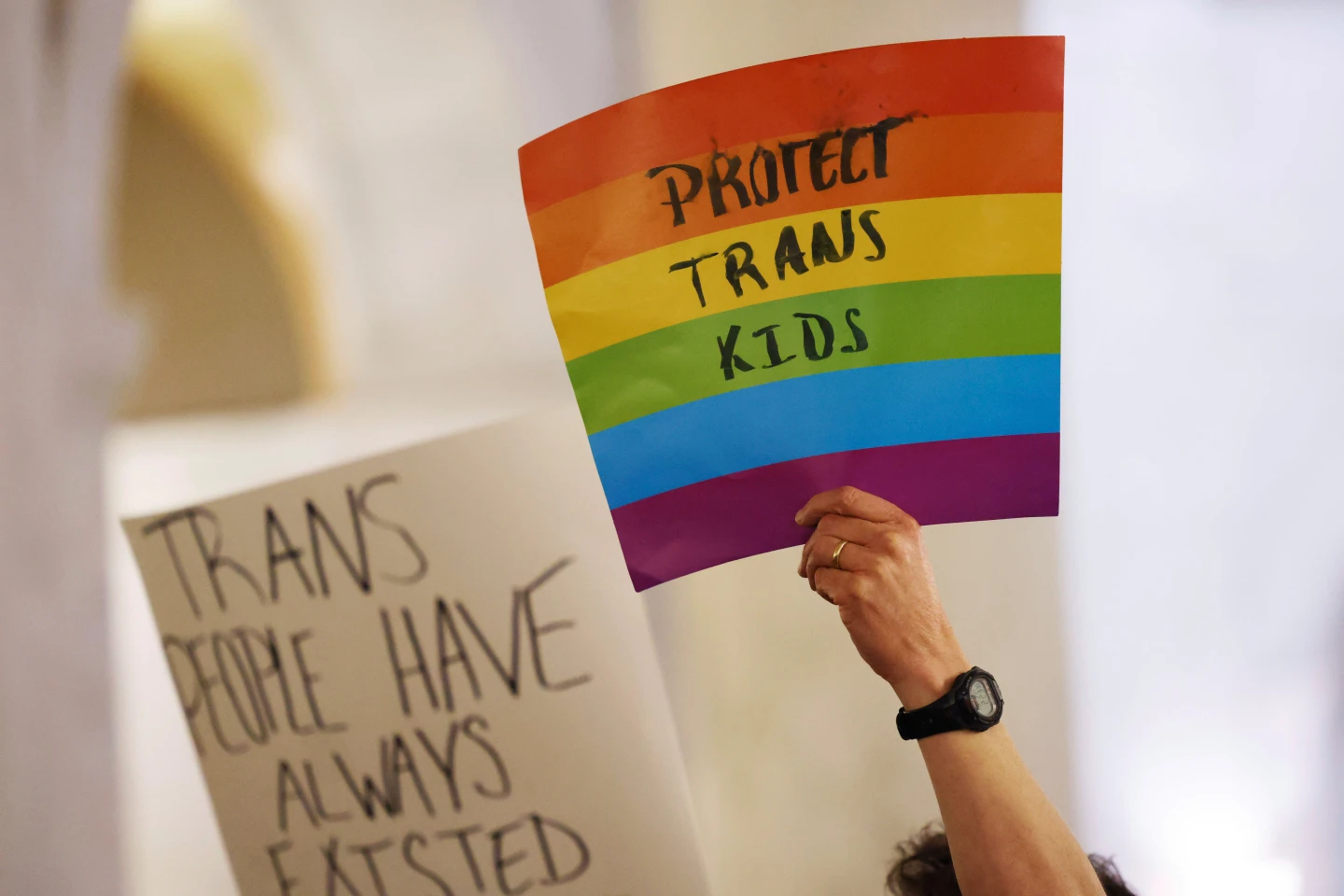
WASHINGTON (AP) — 15-year-old Becky Pepper-Jackson, who finished third in the discus in West Virginia last year, is now faced with the reality that her next athletic season may be her last. State laws across more than two dozen states, including West Virginia, bar transgender girls like Pepper-Jackson from competing in girls' and women's sports.
Although lower courts have blocked West Virginia's law, the outcome may change with the conservative-dominated Supreme Court set to hear arguments that question whether these bans conflict with the Constitution and Title IX, the federal law that prohibits sex discrimination in education. A pivotal case from Idaho involves college student Lindsay Hecox, who is also challenging similar restrictions.
The court's decisions are expected by early summer, leaving athletes like Pepper-Jackson in limbo. The Republican administration under former President Trump has spearheaded measures against transgender individuals, making the current legal landscape particularly charged.
As Pepper-Jackson's story becomes emblematic of the larger fight over transgender rights in sports, she openly expresses both determination and fear for the future. During a recent interview, she emphasized the importance of her participation in sports for herself and other athletes.
Her mother, Heather Jackson, condemned the efforts to exclude her daughter from competition as rooted in hatred rather than fairness. Likewise, the topic has ignited fierce public debate, with polls suggesting that approximately 60% of U.S. adults support barring transgender athletes from competing according to their gender identity.
Despite the small number of transgender athletes competing, the controversy has escalated at state and national levels, raising questions of equity, identity, and respect in sports. With the approaching legal battles, the survival of provisions ensuring transgender athletes' rights is at a critical juncture.
For her part, Pepper-Jackson, who has taken puberty blockers and identifies as a girl since the third grade, has demonstrated significant improvement as an athlete, garnering both accolades and criticism. She stands at the crossroads of a pivotal legal moment that may define the rights of transgender individuals in athletics for years to come.