

In brief
The Trump administration has signed a nuclear deal with Saudi Arabia that removes the conventional condition of Israeli normalisation, a move that caught many by surprise. Former presidents had linked civilian nuclear aid to Saudi Arabia’s cooperation with Israel, but the Trump deal chose to grant nuclear technology without any reciprocal concessions. Critics warn that allowing Saudi enrichment could spark a Middle‑East arms race, while proponents argue it strengthens U.S. influence over a key ally amid rising tensions with Iran. The agreement’s lack of stringent inspections and the future path toward a potential military program add to the geopolitical uncertainty.
Trump’s recently signed nuclear agreement with Saudi Arabia bypasses a long‑standing U.S. requirement that the Gulf state normalise ties with Israel in return for civilian nuclear aid.
Former presidents insisted on a two‑step process: Saudi Arabia had to work toward normalising relations with Israel in order to receive American nuclear technology for power generation. The Trump deal, however, skips that conditional requirement, granting nuclear assistance unconditionally.
The agreement has drawn sharp criticism from many who fear it could trigger an arms race in a volatile region. Analysts point out that the pact does not include strict inspections or provisions that would forbid Saudi Arabia from developing a military nuclear programme in the future.
“Countries in the Middle East want to develop nuclear infrastructure and they are going to do it even if the U.S. is not involved,” said Yusuf Can, a Middle‑East expert. “With this nuclear deal, the U.S. is basically saying you do not have to work with China; you can work with us,” he added.
The deal allows Saudi Arabia to enrich uranium on its own soil, a feature that distinguishes it from the 2009 U.S.–UAE cooperation agreement that included strict IAEA inspections.
Proponents argue the pact diversifies Saudi energy sources and could reduce its reliance on oil, offering a “self‑contained” power supply that is less vulnerable to disruptions in the Strait of Hormuz.
Critics in Israel and the U.S. weigh in on the possible security implications. Avigdor Lieberman, a former Israeli defence minister, warned that a civilian programme could lead to a “mad arms race across the entire Middle East.” Democratic congressman Ro Khanna called the deal “a giveaway to the Saudis” that could destabilise the region and “fuel further ambitions from Iran.”
Energy Secretary Chris Wright defended the agreement, stating it would boost the American economy and uphold “the highest standards of nuclear safety and nonproliferation.” Backers argue that U.S.-based firms will benefit from collaboration with Saudi companies in building new reactors.
While the deal’s immediate political payoff is clear, and Saudi Arabia cements its status as a Gulf powerhouse, the long‑term outcome depends on how the partnership evolves in the face of regional pressures and domestic policy shifts in Washington.
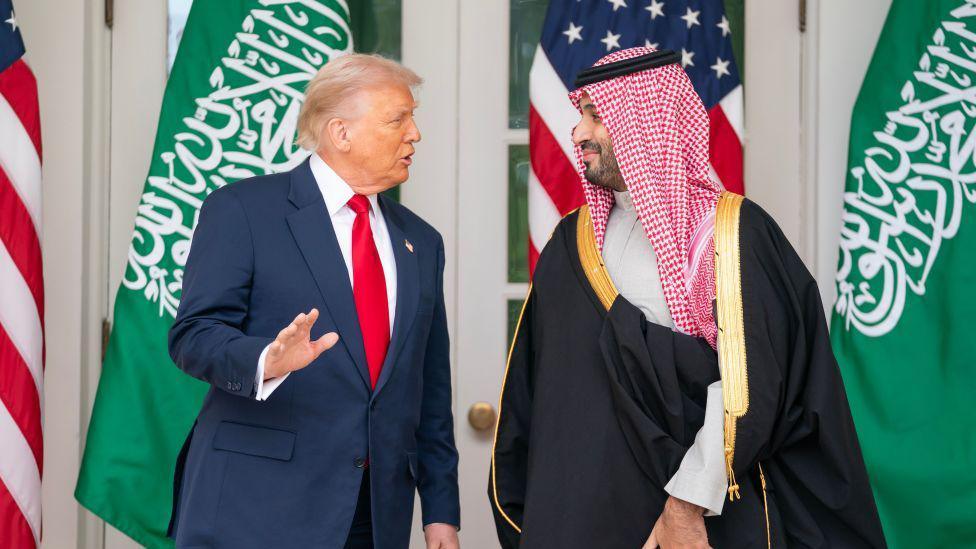
Picture: Trump leads Saudi Crown Prince Mohammed bin Salman on a tour of the White House in Washington, D.C., last November.
