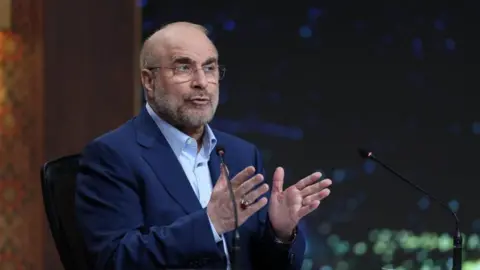
If and when a photograph is taken of US Vice-President JD Vance standing next to Iran's Parliamentary Speaker Mohammad Bagher Ghalibaf in Islamabad this weekend, it will make history. The moment would mark the highest-level face-to-face talks between the Islamic Republic of Iran and the United States of America since the 1979 Islamic Revolution shattered their strong strategic bond and cast a long shadow which still darkens relations to this day.
The two men may not smile. They may not even shake hands. It would not make this troubled relationship any more easy, any less hostile. But it would send a signal that both sides want to try to end a war sending shocks worldwide, avoid an even riskier escalation, and turn to diplomacy to do a deal.
There's zero chance though of US President Donald Trump's optimistic prediction of a 'peace deal' within this shaky two-week ceasefire - its terms were contested and broken since the moment it was announced earlier this week. Even until the eleventh hour, Iranians kept everyone guessing over whether they would still show up while Israel was insisting there would be no ceasefire in Lebanon.
If serious and sustained talks make a start, it would also mark the most significant push since Trump pulled out of the previous landmark nuclear deal in 2018, during his first term. Those talks, in endless rounds stretching over nearly 18 months of breakthroughs and breakdowns, were the last high-level meetings between the then-US Secretary of State John Kerry and Iran's then-Foreign Minister Mohammad Javad Zarif.
Efforts since then, including during US President Joe Biden's term, made little headway. The gaps between the two sides remain very wide and the distrust runs very deep. That well is especially vast for Tehran after their last two series of negotiations, in June 2025 and February this year, were suddenly whacked by the opening salvos of a US-Israeli war.
But the upcoming meeting signals a potential shift, with heightened stakes for both parties and a new willingness to engage amidst rising hostilities. Historically, previous negotiations have included high levels of expertise and coordination. The current dynamic, spotlighting a heightened friction, complicates the possibility of constructive dialogue and agreement.
As both sides prepare for the talks, critical concerns about military capabilities, economic sanctions, and regional stability will be central to discussions. It remains to be seen if this moment will translate into tangible progress towards improved relations and a better future for the war-torn region.