
In brief
A bumper durian harvest in 2026 has flooded the market, driving prices to historic lows and prompting Singapore stall owners to give away ripe fruit for free. The surge has left Malaysian farmers—especially those focused on premium Musang King varieties—undermined by orders of magnitude drop in revenue, forcing them to cut prices or wait for the market to recover. The crisis highlights the delicate balance of supply and demand in global agriculture and the ripple effects on local economies.
When Durian Went Free: Singapore & Malaysia Catch a Fruit Tsunami
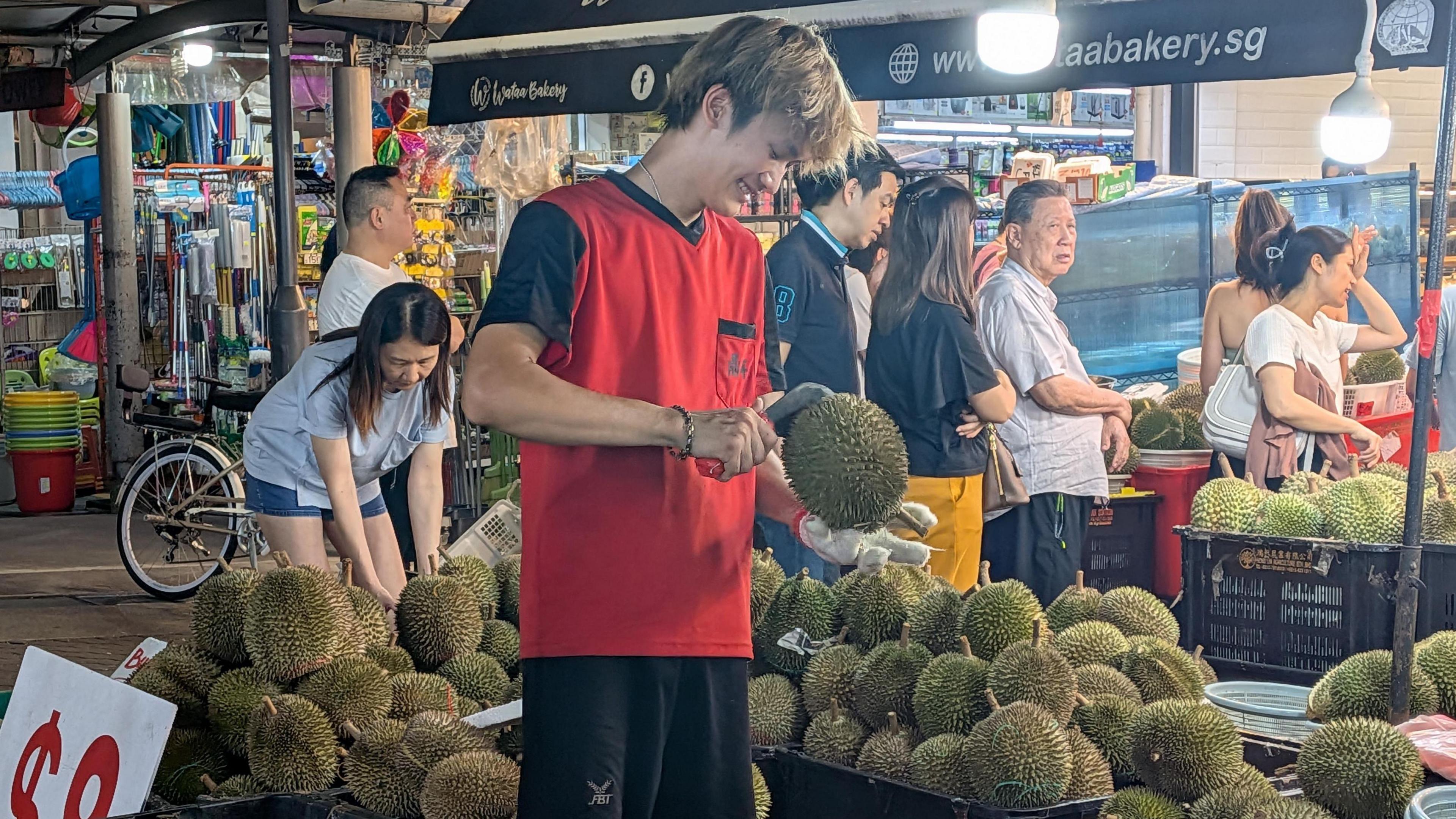
Two blocks home to the Durian Ninja stall in Singapore’s Tampines township have become a stop‑over point for thousands of durian fans, each hoping to snag a free or half‑priced prize.
The stall owner gives away two ripe durians per customer and can hand out roughly 600 kilograms of fruit daily—thanks to an overflow of produce arriving from Malaysia.
Malaysia, the region’s largest durian exporter, produced about 550,000 tonnes per year. In 2026 this output was pushed over the top, sending the market into a sharp price drop, and many riders describing the event as a “durian tsunami.”
Local consumers say the fruit feels “almost free” compared to previous seasons, with most offering a handful of kitchens the choice between buying at a fraction of the past price or receiving fresh fruit outright.
The good news for Singapore dwellers turns into a headache for Malaysian farmers. With the most prized Musang King varieties now yielding under a hundred ringgit per kilogram, dozens of growers—especially in the Raub area—have seen their profits tumble.
Farmers like Lu Yuee Thing and Han Sing Keng report that better yields did not translate into high prices due to the flood of lower‑grade “kampung durian” that saturates market shelves.
The Federal Agricultural Marketing Authority has begun buying durians from farms at a guaranteed base price, while industry bodies continue to fight for premium exports to China.
Meanwhile, stall owners in Singapore and elsewhere keep offering discounts as a strategy to bring in younger consumers who were previously deterred by the fruit’s reputation for being too pricey.
Only a few weeks appear to be sufficient for the market to recover, experts say, as rainfall and growing conditions fluctuate across the country, adding another layer of uncertainty to an already uneven harvest.
The free‑fruit frenzy has made a curious headline: a once‑prestigious commodity being handed out as charity, but the underlying economics remind us of the thin line between surplus and scarcity in global agriculture.
