
In brief
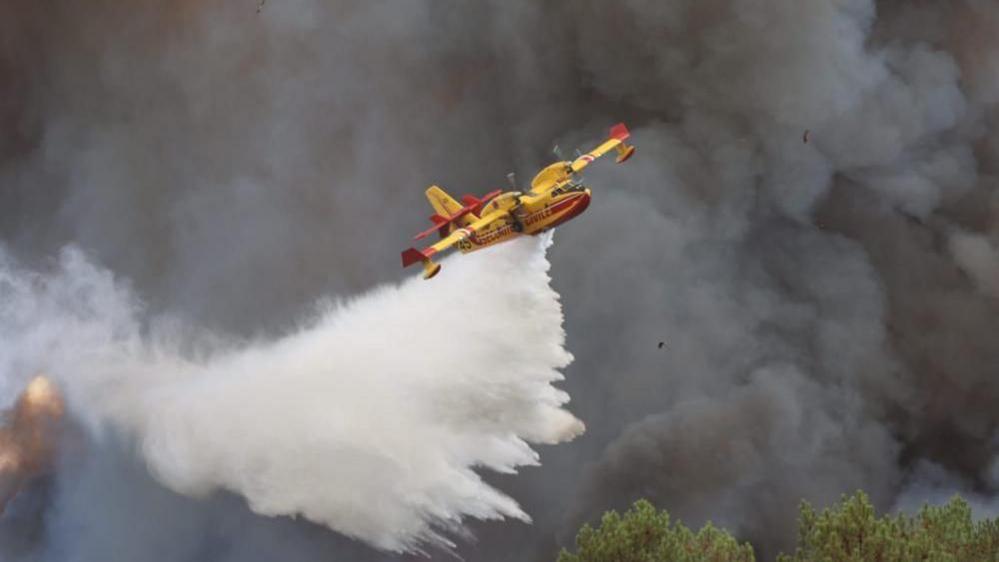
In the Gironde region, aerial water drops from Canadair aircraft and helicopters pour more than 1,000 gallons of water onto fierce flames, giving ground crews a brief reprieve. Yet despite these efforts, the fire roars west of Bordeaux and forces thousands to flee. Local residents, including father Pierre Alexandre, defy evacuation orders and cling to their homes, illustrating the desperate conflict between land stewardship and safety.
The sky over Bordeaux is painted with the plume of a vast wildfire. A fleet of Canadair planes pours water onto the flames, each aircraft carrying more than 1,000 gallons. Helicopters that follow spray a thick, red retardant that lingers over the high trees of the Gironde forest.
Ground crews move in once the smoke thins, but the heat soon flares again, forcing them to keep pushing the fire into retreat. Intensive efforts to "noyer" the burned land – literally drowning the soil to prevent reignition – are met with the same relentless 40°C heatwave that keeps the fire alive.
Among the locals fighting the blaze is Pierre Alexandre, a resident whose bungalow sits directly beside the first spark of the fuse. When firefighters issued an evacuation order, he hoisted photos from his roof and refused to leave. He tells his son, while a volunteer named Hugo fills his tank with water, that turning away is simply not an option for what they call 'their home, their forest'.
Not one person alone can quell wildfires that spread through wool‑dry pine litter and dust. Volunteers from across France – from Brittany to Lyon – descend on the area with water tanks, driving from the front lines to help the professional crews. It is an unwritten pact: protect a land, preserve a life, and survive.
The scale of the crisis is reflected in mapping data that shows hotspots squeezing out as Bordeaux warms, a visual reminder that containment is only a temporary victory. Meanwhile, the community’s refusal to evacuate under world‑record heat displays a stark image of the choices people must make in an age of extreme climate.

