Former Chinese Premier Zhu Rongji, architect of China’s WTO entry, dies at 97
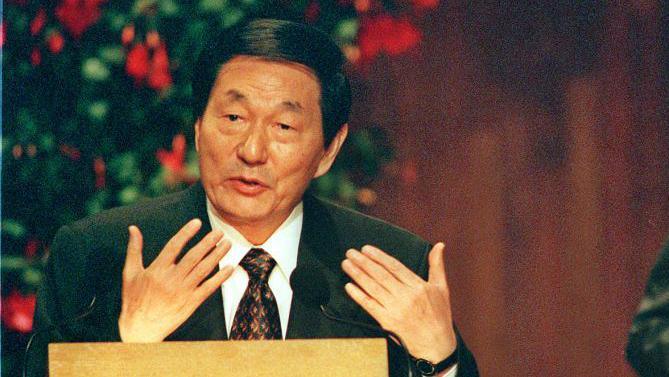
Former Chinese Premier Zhu Rongji, celebrated for guiding China into the World Trade Organization, has passed away at the age of 97. He held the country’s second‑highest office from 1998 to 2003 and was instrumental in opening Chinese factories to the global market and attracting foreign capital.
During his premiership, Zhu led sweeping economic reforms: the central government took control of key tax streams, the state rolled back or privatised struggling enterprises, and a home‑ownership boom helped lift millions into the market economy. These steps transformed China from a Communist outsider into a manufacturing powerhouse, producing double‑digit growth on a regular basis.
Critics noted that the same policies that drove rapid expansion also forced roughly 30 million workers out of five years and deepened the wealth divide. Nonetheless, state media celebrated Zhu’s legacy as one of “revolution, struggle and brilliance,” laying out his reputation as an honest, pragmatic leader who wasn’t afraid to speak his mind.
Born in Hunan province in 1928, Zhu earned an engineering degree before entering civil service. He joined the Communist Party in 1949 but endured two purges – first as a “rightist” accused of critiquing Mao’s economic policies, and later during the Cultural Revolution. After the Party’s rehabilitation, he rose to vice‑premier in 1991, and later to premier in 1998.
Under his stewardship, China secured WTO membership in 2002, marking an inflection point as the reform‑booted market tapped a global supply chain and consumer network. The reforms also required a stronger, more accountable bureaucracy, a fight against endemic corruption, and a drive towards equitable distribution of wealth.
State media and Party commentators have lauded his achievements, though his tenure remains a contested chapter in the balance between rapid growth and social equity. Zhu’s passing marks the end of an era for a leader whose name is synonymous with China’s shift from isolation to global integration.