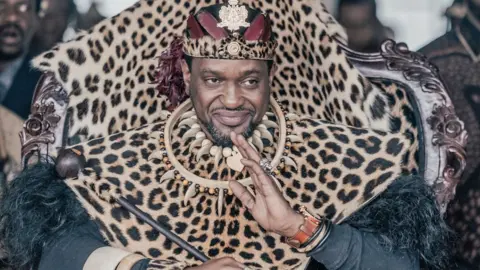
South Africa's Zulu king has raised eyebrows by using a highly derogatory term for foreigners and saying they must all leave the country during a much-hyped speech that was supposed to have been aimed at calming anti-migrant feelings in his home province of KwaZulu-Natal.
Warning: This story contains language some people may find offensive
Misuzulu kaZwelithini was addressing his supporters at the place where 20,000 Zulus warriors defeated a British contingent of 1,800 soldiers 147 years ago beneath the rocky outcrop of Isandlwana hill.
The ire of many of King Misuzulu's subjects is now directed not at British invaders but at migrants from neighbouring countries like Lesotho, Mozambique and Zimbabwe who have come to South Africa to work. According to official statistics, the country is home to about 2.4 million migrants, about 4% of the population.
The 51-year-old monarch did not advocate violence but said all kwerekwere, an offensive word for African migrants, must pack their bags - even if they were in relationships with South Africans and had children with them. We must now sit down and discuss this because even if my nephew's father is a 'kwerekwere', the 'kwerekwere' must leave, only the child will remain, he said on Thursday to the delight of his audience.
His remarks come as xenophobia and anger directed at migrants remain a key political issue, exacerbated by high unemployment rates in South Africa amidst various politicians’ populist policies aimed at the expulsion of undocumented migrants.
Critics have warned that the king's words encourage harmful sentiments that could incite violence against foreign nationals, a concern reiterated by human rights experts.
Additionally, the king's call to remove Natal from the name of KwaZulu-Natal—to emphasize a sense of Zulu identity—also raises questions about nationalism in a province that is home to many cultures.
Should the renaming proceed, it could evoke memories of historical tensions in South Africa, highlighting the need for sensitive dialogue concerning identity politics in the country.