
In brief
In a landmark event, France has returned the skull of King Toera, who was killed by French troops in 1897. This significant act took place during a ceremony at the French culture ministry in Paris. The return follows decades of efforts by the king's descendants and reflects a growing trend of returning colonial-era remains to their countries of origin. The procedure was made possible by recent legislation aimed at facilitating such returns, addressing past injustices of colonial violence.
The head of a Malagasy king killed by French troops during a colonial-era war has been formally returned to Madagascar.
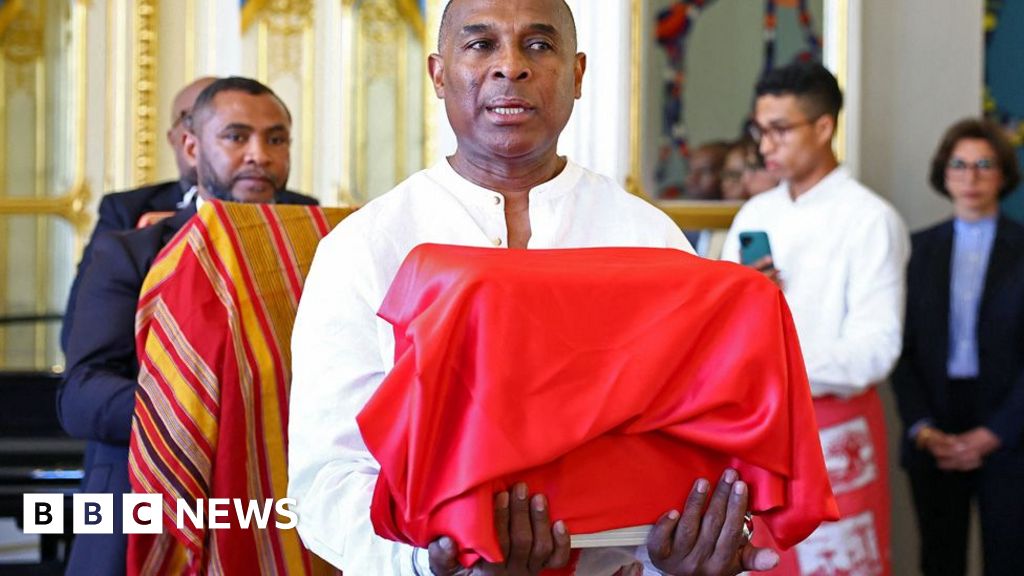
The handover of King Toera's skull - and those of two other members of his court - took place at a ceremony at the culture ministry in Paris.
The skulls had been brought to France at the end of the 19th Century and stored at the Museum of Natural History in the French capital.
It is the first use of a new law meant to expedite the return of human remains from collections in France.
These skulls entered the national collections in circumstances that clearly violated human dignity and in a context of colonial violence, French Culture Minister Rachida Dati stated at the ceremony.
In August 1897, a French force sent to assert colonial control over the Menabé kingdom of the Sakalava people in western Madagascar massacred a local army. King Toera was killed and decapitated, with his head sent to Paris where it remained in archives until now.
The drive for the skull's return was supported by both the king's descendants and the government of Madagascar.
Culture Minister Volamiranty Donna Mara described the return of the skulls as a significant gesture, noting that their absence had been an open wound in the heart of our island for over a century.
This return is part of a broader movement, as France acknowledges its colonial history and the injustices associated with it, reflected in the recent law facilitating returns.
The return of King Toera's remains highlights the ongoing dialogue around colonial legacy and reparations, as similar efforts are being echoed across various nations.


