
In brief
Portland's ongoing protests at the U.S. Immigration and Customs Enforcement building highlight tensions surrounding immigration enforcement, law enforcement practices, and community relations. Longtime demonstrators have faced resistance from law enforcement and concerned residents as President Trump's threats of federal intervention loom over the city. Amidst a backdrop of declining crime rates, the situation continues to evolve, with a divided community grappling with the consequences of the ongoing protests.
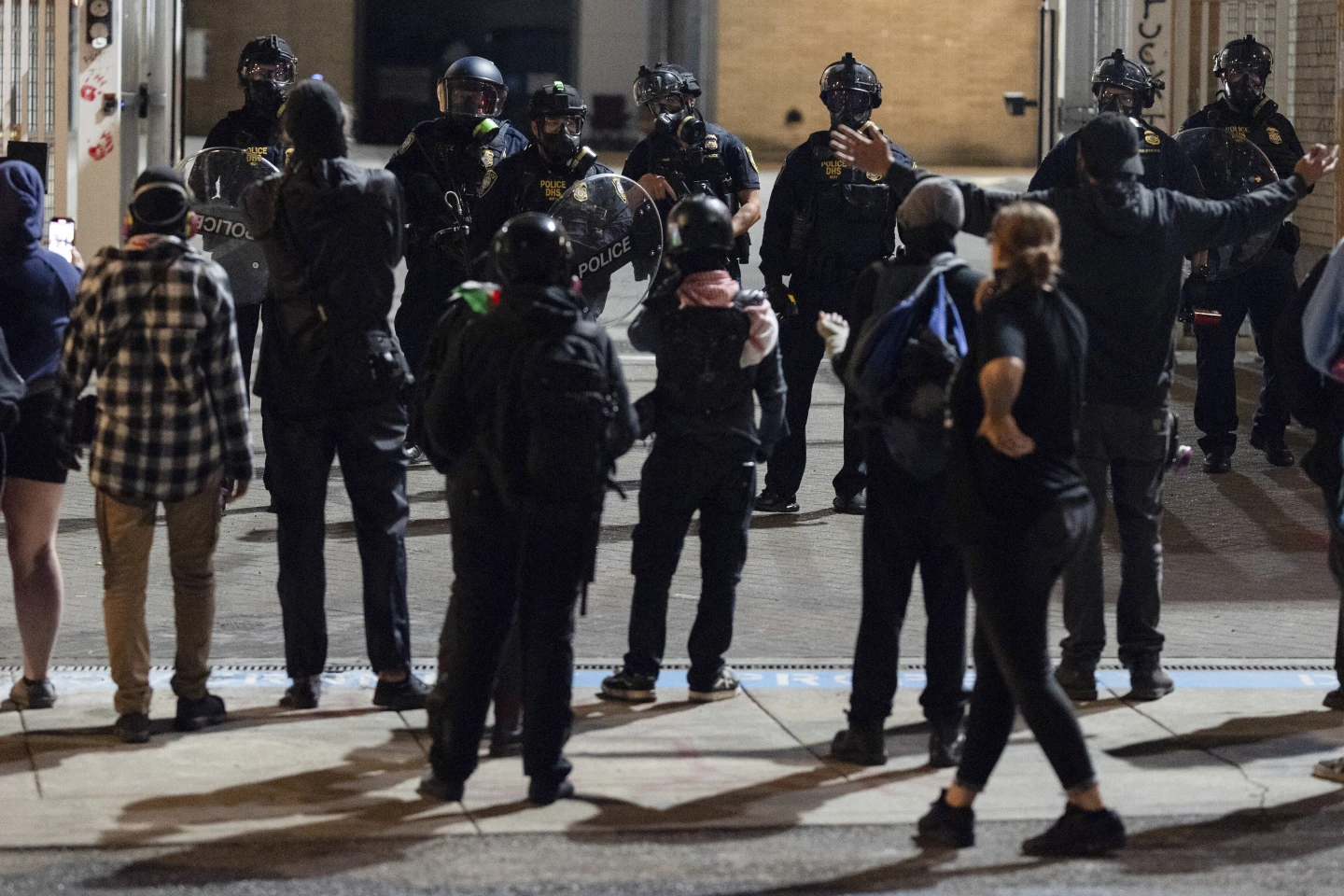
PORTLAND, Ore. — A gas mask dangled from Deidra Watts's backpack as she joined dozens of others outside the U.S. Immigration and Customs Enforcement building in Portland, a scene that has become familiar since July. The protesters toe a blue line marked 'GOVERNMENT PROPERTY DO NOT BLOCK,' enduring pepper balls fired from officers above.
While these gatherings have caused some inconvenience to nearby residents, they are relatively peaceful compared to the more intense unrest following George Floyd's murder in 2020. The protests have recently caught the attention of President Trump, who starkly described life in Portland as 'like living in hell,' reflecting his inclination to dispatch federal troops to curb crime.
Notably, despite such dramatic assertions, many reports indicate a significant decline in violent crime nationwide, including in Portland, where homicides have decreased early this year by 51% compared to last year.
Activists argue that protests are necessary to combat what they view as the cruelty of ICE operations. “That’s not something the people agree with,” Watts emphasized. Local residents have mixed feelings about the protests, with some directly affected by noise and activity near their homes, leading to legal and community actions against the protests.
The current protests appear focused on the ICE building while raising larger questions about freedom of expression, immigration enforcement, and community safety. As tensions persist, local leaders are calling for an end to federal intervention and highlight the need for a united approach to address both community concerns and immigration policy.

