
In brief
After the tragic death of a rideshare driver during protests in Jakarta, unrest has spread across Indonesia, fueled by frustrations over cost of living and political inequality. President Prabowo's response includes reevaluating politician perks, but demands for broader systemic change remain unaddressed amid fears of police brutality.
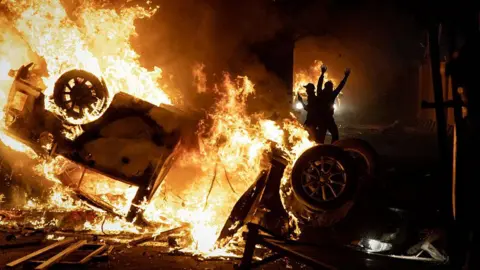
Protesters have been killed, buildings torched and politicians' houses looted as anti-government unrest spreads across Indonesia - and the authorities respond with force.
Mass demonstrations, fuelled by cost-of-living woes and public frustration with the political elite, first erupted in Jakarta on 25 August to condemn what many viewed as excessive pay and housing allowances for parliamentarians.
By the end of the week, things had boiled over into violence. On Thursday night, following escalating clashes between demonstrators and authorities, police in Jakarta ran over and killed 21-year-old motorcycle rideshare driver Affan Kurniawan.
President Prabowo Subianto and the chief of police apologised for his death - but it fuelled further discontent that has now spread to various corners of the archipelago, from West Java to the islands of Bali and Lombok. At least seven people had died in the protests by Monday, according to Indonesia's co-ordinating minister for economic affairs.
The primary trigger for the protests was the Indonesian government's decision to raise the allowance for national parliamentarians. Local media last month reported that they were paid upwards of 100 million rupiah (£4,499; $6,150) a month - more than 30 times the average national income - including a substantial housing allowance.
Meanwhile, everyday Indonesians were struggling because of a cost-of-living crisis. As the government is undertaking austerity measures, and at a time when citizens are feeling economically insecure, the notion that Indonesia's already wealthy political class would see their incomes rise filled people with rage, Dr Eve Warburton, director of the Indonesia Institute at the Australian National University, told the BBC.
These protests spiralled after Affan's death, and have since grown to encompass issues of police brutality and accountability. But there are other systemic issues driving the public anger: political corruption, social inequality and economic headwinds from which the rich and powerful seem unfairly insulated.
In an attempt to quell the nationwide protests, President Prabowo announced on Sunday that several state-funded perks given to politicians would be reined in, including the size of some allowances. While the move was welcomed by protesters, some suggest it doesn't go far enough.
At the same time as winding back politicians' benefits, Prabowo also ordered the military and police to take stronger action against rioters, looters and arsonists after homes of political party members and state buildings were ransacked and set ablaze. Protesters torched regional legislative council buildings across multiple Indonesian provinces.
The unrest prompted Prabowo to cancel a visit to China, promising to monitor the situation directly and find a solution. TikTok has also suspended its live streaming feature in Indonesia for the next few days, in a bid to limit potentially inflammatory content amid concerns about live mass mobilisation.
As the situation continues to evolve, it is unclear where the protests will go from here – whether they will spiral into further violence or force the government to reconsider its approach to governance.


