In brief
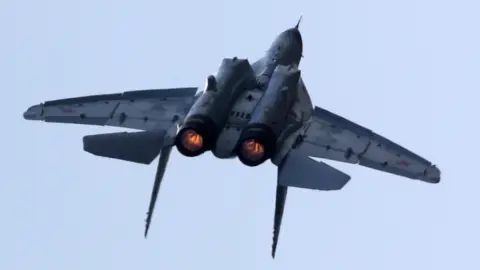
In a recent escalation of military tensions, Estonia's foreign ministry has strongly condemned the unauthorized entry of three Russian MiG-31 fighter jets into its airspace over the Gulf of Finland. The jets reportedly remained in Estonian airspace without permission for 12 minutes. Estonian Foreign Minister Margus Tsahkna described the incursion as 'unprecedentedly brazen' and called for increased political and economic pressure on Russia. This incident follows multiple airspace violations by Russia in 2025 and reflects ongoing conflicts in the region amid heightened NATO-Russia tensions since the Ukraine invasion.
In a bold move, Estonia's foreign ministry has condemned the unauthorized entry of three Russian MiG-31 fighter jets into its airspace, calling the incident 'brazen'. The violation, which occurred over the Gulf of Finland, saw the jets linger in Estonian airspace for a total of 12 minutes without permission.
Estonian authorities summoned the Russian chargé d'affaires to officially protest the incident, which has been labeled by top EU diplomat Kaja Kallas as 'an extremely dangerous provocation'. Reports indicate the Russian jets had their transponders turned off while operating in a NATO member's airspace.
Estonian Foreign Minister Margus Tsahkna expressed that this incursion is 'unprecedentedly brazen' and called for increased political and economic pressure on Russia, whose military activities in the region have been growing increasingly aggressive. In 2025 alone, there have reportedly been four violations of Estonia's airspace by Russian military aircraft.
Events of recent weeks have shown rising tensions between Russia and neighboring NATO countries. Just last week, Poland and Romania reported similar breaches involving Russian drones, with Poland's military stating it had shot down multiple unauthorized drones linked to these incursions.
The broader context of these incidents is significant, as military tensions have escalated between NATO and Russia since the onset of Moscow's full-scale invasion of Ukraine in 2022.
As the geopolitical situation continues to deteriorate, the need for vigilance and appropriate responses from NATO allies becomes increasingly critical.