
In brief
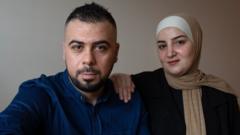
The journey of Abdullah Al Nofal, a Syrian refugee who recently opened up about his traumatic experiences in Al-Khatib prison, sheds light on the dark realities faced by many in Syria. His wife, Douna, a human rights activist, reflects on their shared narrative and the struggle for justice and acknowledgment of those who suffered.
In early December, Douna Haj Ahmed, a Syrian refugee based in London, confronted the chilling reality of her husband Abdullah Al Nofal’s past as they watched news of prisoners escaping the oppressive regime in Syria. The moment struck deeply when Abdullah, who had remained silent about his incarceration for years, revealed, "This is where I was arrested, this is the place." The emotional weight of this revelation unfolded, unearthing stories of suffering that had long lain hidden within their marriage. Douna, whose brothers also endured arrest during Syria’s protracted civil strife, struggled to absorb the magnitude of her husband's trauma. “Abdullah does not like to share things emotionally; he needs to appear strong,” she shared. “But seeing him cry revealed a potent vulnerability. He acknowledged, ‘I could be one of them,’ referencing those who perished in prison.” This moment acted as a form of closure, wherein they both felt compelled to shed light on the unspeakable atrocities suffered by many Syrians.Abdullah, then 36, was apprehended in 2013 while working as a storekeeper for the International Committee of the Red Cross during an anti-regime protest in Damascus. He was essentially swept up in a harrowing ordeal, taken blindfolded to the infamous Al-Khatib prison, a facility synonymous with torture and death. A recent report indicated that around 60,000 Syrians endured torture or died amidst the dire conditions under the Assad regime. He recounted his experience vividly, disclosing the horrors of solitary confinement, and the ensuing torture that he and fellow detainees suffered at the hands of their captors.During his thirteen days of detention, Abdullah witnessed unimaginable suffering as screams echoed through his prison cell, a prelude to the infliction of violence and pain by the guards. “Every minute felt like dying," he explained. "When you would glance around, people were barely alive, bleeding and near-naked.” Despite the physical and psychological torment endured, Abdullah told a fabricated story during interrogations to escape the brutal cycle of abuse—a decision that ultimately led to his release and eventual relocation to the West.For years following their escape from the Assad regime's clutches, Abdullah kept his memories buried in silence, fearing the implications of his survival tale. However, now liberated from the shadow of his past, he feels empowered to speak out. "Now we can share our names and faces, we can tell our story," he affirmed, embracing the chance to raise awareness for the multitude of Syrians still trapped in such horrors.With tears streaming down her face, Douna expressed her heartache upon hearing her husband's full account for the first time. “Every time I think the regime has reached the peak of its brutality, I am reminded that it can get worse,” she expressed. “We are fortunate to recount our experiences; many others remain unheard, having succumbed to the horrors within those prisons.” Together, they are determined to amplify the stories of the silenced, shedding light on pervasive injustice and striving for a future that honors the resilience of survivors.

