
In brief
President Donald Trump has threatened to federalize Washington, D.C.'s police force once again after Mayor Muriel Bowser announced the city's non-cooperation with federal immigration enforcement. Trump's previous emergency order, which temporarily placed D.C. law enforcement under federal control, has recently lapsed, and protests on the matter continue as local officials navigate the complex relationship with federal authorities. Today's discussions emerge as new legislative proposals regarding D.C.'s policing powers are considered by Congress.
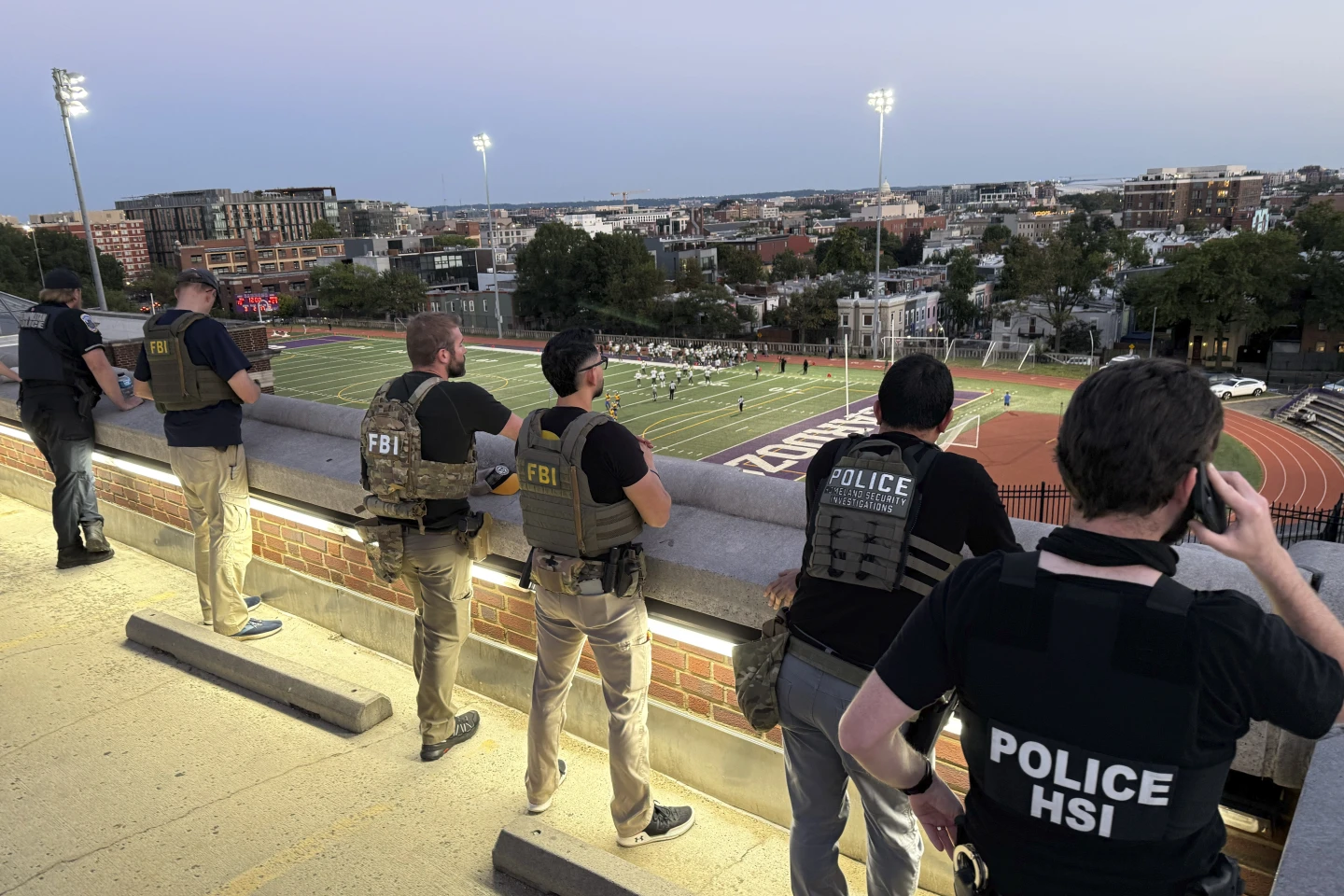
WASHINGTON (FluxDaily) — President Donald Trump has once again hinted at the possibility of federalizing Washington, D.C.'s police force, which would follow an emergency order that just lapsed last week. This proposed action comes after Mayor Muriel Bowser stated that the city would no longer cooperate with Immigration and Customs Enforcement (ICE) in its operations. Bowser has indicated that while D.C. will refrain from assisting ICE, it will continue to collaborate with other federal agencies, including the FBI and DEA.
On Monday morning, Trump took to social media to assert that his intervention had positively impacted crime rates in D.C., a claim that contrasts with available data indicating a decline in crime prior to the federal enforcement increase. Trump warned that if immigration enforcement cooperation halts, he would consider declaring a national emergency to enforce federal control.
The White House did not clarify whether Trump intended to act on this latest threat or if there is any plan to renew his previous emergency measures that placed D.C.'s police operations under federal oversight, which was not extended by Congress before lapsing on September 11.
After the expiration of the previous order, Mayor Bowser emphasized that immigration enforcement is not the role of the Metropolitan Police Department (MPD), underscoring the city's commitment to its limited autonomy granted under a home rule agreement established in 1973.
In addition to the immigration-related tensions, discussions in Congress aim to amend specific rules regarding D.C.'s juvenile justice system and local governance, potentially altering the dynamics of control between the city's officials and federal authorities.
The situation remains fluid as both local and federal responses evolve in the face of rising tensions around immigration policy and policing in the nation's capital.

