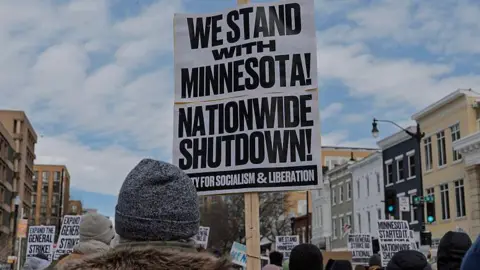
As President Donald Trump's mass deportation campaign escalates, businesses of all sizes—from local cafes to retail giants—are now caught in a difficult position. In metropolitan areas like Minneapolis, the Department of Homeland Security is conducting what it describes as its largest operation, causing many businesses to either temporarily close or halt new reservations amid growing protests.
Following the tragic killing of Alex Pretti by U.S. Border Patrol in Minneapolis, over 60 CEOs from prominent Minnesota corporations, including Target and Best Buy, signed an open letter advocating for immediate de-escalation and stronger collaboration among local and federal authorities.
Notably, while this letter calls for tension reduction, it does not address immigration enforcement directly or acknowledge recent arrests occurring within corporate environments. For example, reports show federal agents detaining employees at Target and conducting operations in public areas like Home Depot parking lots across the nation.
ICE's Authority in Workplaces
Businesses remain under scrutiny as ICE conducts operations without the necessity of a warrant in public areas. Jessie Hahn of the National Immigration Law Center explains that just as the general public can enter stores, law enforcement officials can also do so. However, ICE typically needs a judicial warrant to access private areas like back offices without a business's consent.
In practice, many businesses are adapting to the new reality, erecting signs to delineate private spaces and training employees on how to handle law enforcement inquiries. Some employers are beginning self-audits amidst a climate of heightened uncertainty.
The Broader Response
Public sentiment has shifted significantly, with many smaller businesses voicing concerns about the impact of ICE's actions on their workforce and clientele. Nevertheless, companies like Target have faced backlash for their silence on the issue of employee detentions, even as their leadership calls for broader de-escalation.
Activists associated with the “ICE Out of Minnesota” initiative are demanding that companies take a stronger public stance against immigration raids. While some unions are vocal in their opposition—pointing to the detrimental effects of these policies—many corporate leaders opt for a less confrontational approach.
Hahn emphasizes the importance of businesses speaking out against ICE’s aggressive tactics, which are contributing to labor shortages and reduced commerce within their locations. She warns that failure to push back against these overtures could shape a drastically altered economic landscape.