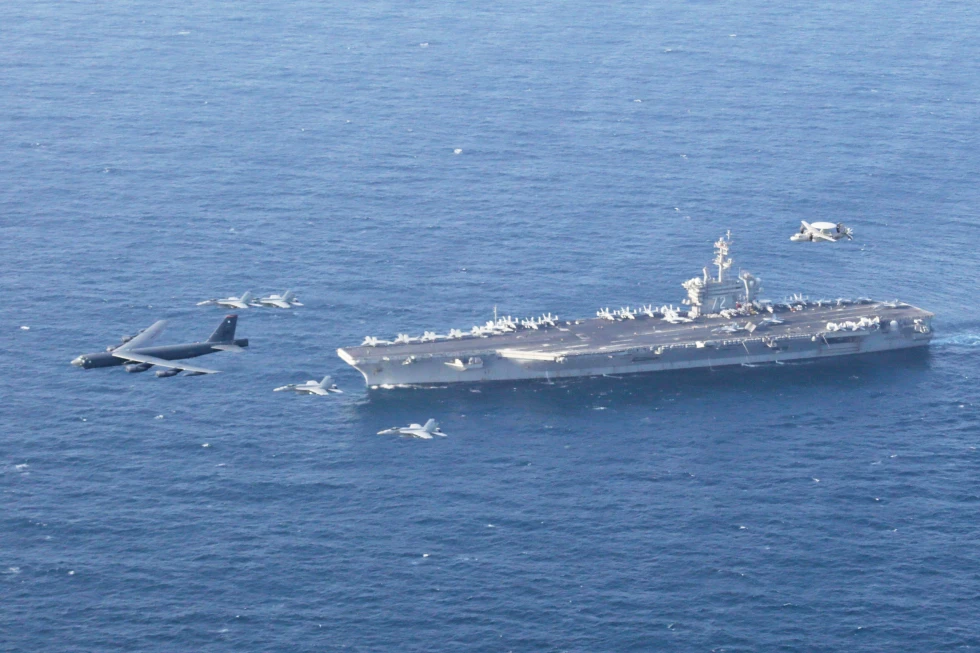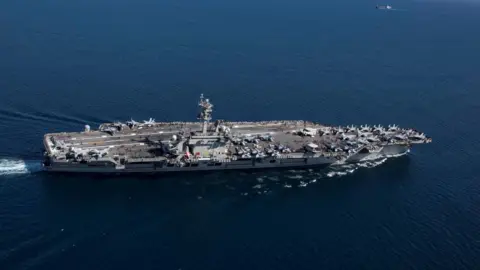
The arrival of the USS Abraham Lincoln carrier strike group into the US Central Command area of responsibility, close to Iranian waters, has sharpened the sense that a broader confrontation may be taking shape.
Coming amid the most extensive and violent crackdown on protests in Iran in recent memory, the deployment underscores how close Washington and Tehran may now be to a direct showdown—closer than at any point in recent years.
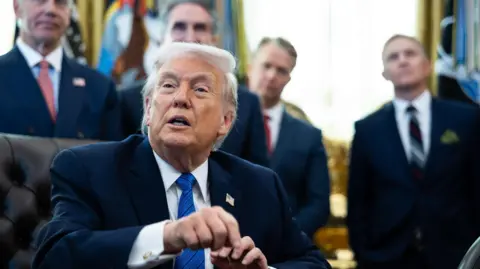
Iranian leaders find themselves squeezed between a protest movement increasingly demanding the removal of the regime itself and a US president who has kept his intentions deliberately opaque, fueling anxiety not only in Tehran but across an already volatile region.
Iran's response to a potential US military strike may not follow the familiar, carefully calibrated pattern seen in earlier confrontations with Washington. President Donald Trump's recent threats, made in the context of Iran's violent suppression of domestic unrest, come at a moment of exceptional internal strain for the Islamic Republic. As a result, any US attack now carries a significantly higher risk of rapid escalation, both regionally and inside Iran.
The present moment, however, is markedly different. Iran is emerging from one of the most serious waves of domestic unrest since the establishment of the Islamic Republic in 1979. Protests that erupted in late December 2025 were met with a severe violent crackdown, resulting in thousands of deaths and many more injuries or detentions.
Although the scale of street protests has since diminished, the grievances remain unresolved, and the divide between large parts of society and the ruling system has rarely appeared so wide. As Iranian authorities have recently framed this unrest to align with external threats, any US military action could offer them a pretext for intensified internal repression.
The nature of a potential US strike is critical. A limited attack might allow Washington to claim military success without igniting immediate regional hostilities but could provide Iranian authorities with justification for severe crackdowns. Conversely, a broader campaign that significantly weakens the Iranian state could plunge the nation into chaos, risking instability that could reverberate across the region.
Both sides, aware of their positions, face the risk of dangerous miscalculations. For Iranian leadership, the pressure to respond rapidly to any provocations has escalated, driven by the desire to reassert authority amid ongoing unrest. As tensions mount, the stakes for millions of people in the broader region loom larger than ever, marking a critical juncture in US-Iran relations.