The European Union has added Iran's Islamic Revolutionary Guard Corps (IRGC) to its terrorist list in response to Tehran's deadly crackdown on protesters in recent weeks.
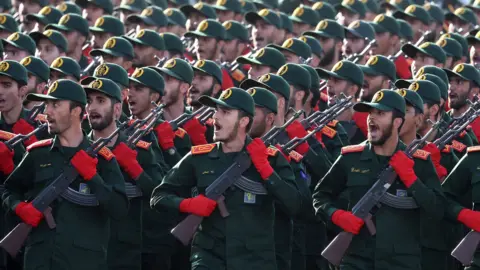
Repression cannot go unanswered, the bloc's top diplomat Kaja Kallas stated, adding that this move equates the IRGC—a major military, economic, and political force in Iran—with jihadist groups like al-Qaeda and the Islamic State.
In response, Iran's Foreign Minister, Abbas Araghchi, dismissed the EU's decision as a stunt and a major strategic mistake. Human rights organizations estimate that thousands of protesters have died at the hands of security forces, including the IRGC, during the unrest that erupted in December and persisted into January.
French Foreign Minister Jean-Noel Barrot described recent actions in Iran as the most violent repression in Iran's modern history and emphasized that those responsible must not go unpunished. Previously cautious in labeling the IRGC as a terrorist entity, France shifted its stance upon urging from Italy, completely supporting the decision to blacklist the group.
Kallas reaffirmed that the EU expects diplomatic channels with Iran to remain open despite the designation, which also included sanctions on six Iranian entities and fifteen individuals implicated in suppressing peaceful protests.
The IRGC, pivotal in the enforcement of the regime's policies since its establishment after the 1979 revolution, wields significant political and military clout and oversees Iran's strategic military assets. Organizations on the EU's terrorist list are subject to sanctions such as travel bans and asset freezes to effectively dismantle their support systems.
In the face of the heightened rhetoric surrounding Iran, U.S. President Donald Trump has signaled military readiness while simultaneously expressing hopes to facilitate negotiations regarding Iran's nuclear program. The Iranian authorities maintain that their forces are prepared to respond decisively to potential threats.