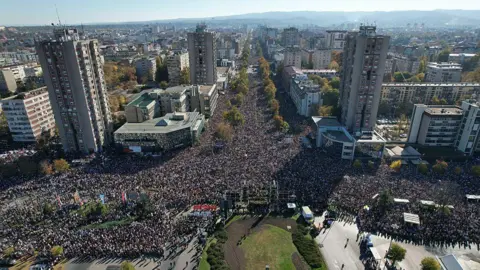
A sea of people flowed along the roads leading up to Novi Sad railway station.
They came in their tens of thousands to remember the 16 people who died there this time last year, on another unseasonably warm and sunny autumn day.
The victims were standing or sitting underneath a concrete canopy at the recently-renovated facility when it collapsed. The two youngest were just six years old, the oldest, 77.
Regular protests have rocked Serbia in the 12 months that have followed. But on Saturday morning, the huge crowd participated in an event that emphasized quiet commemoration.
At 11:52 (10:52 GMT), the time of the disaster, they observed a silence for 16 minutes - one for each of the victims. Family members cried. One woman needed to be physically supported by men wearing the red berets of armed forces veterans.
After the silence, relatives laid flowers at the front of the station. The rubble of the collapsed canopies has been cleared away, but otherwise, the building appears to have remained untouched since the disaster, with twisted metal protruding from the walls and broken glass still offering evidence of the catastrophe.
Novi Sad station was meant to symbolize Serbia's progress under President Aleksandar Vučić's administration. Yet, now it represents the failures of governance. The protests demanding accountability have been predominantly led by university students, reflecting a generational shift in the pursuit of political change.
The students' protests have gained momentum, shifting from accountability demands to calls for fresh elections. They have garnered respect from some political leaders, indicating a potential change in the political landscape of Serbia amid ongoing tensions and public outrage.
In a twist of irony, Vučić has recently softened his combative tone towards the protesters, admitting to saying things he regrets. However, anger still simmers among the youth who continue to challenge the government, insisting on transparency and justice.
This day was about remembrance, but as the crowds dispersed, it was evident that the anger against the systemic failures that led to this tragedy still remains.