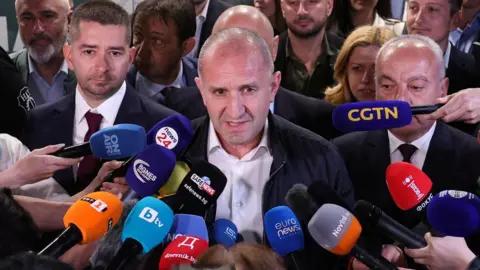
Rumen Radev's Progressive Bulgaria party looks set to win Sunday's Bulgarian Parliamentary election - the eighth general election in five years.
Exit polls put his Progressive Bulgaria on 37%, more than double the score of the closest runner-up, former prime minister Boiko Borisov's GERB on 16%.
Three or four other parties look set to cross the 4% threshold and enter Parliament.
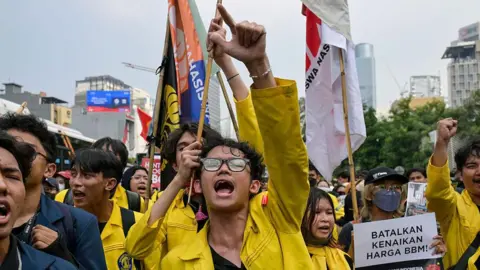
The election was called after the previous government tried to push through a controversial budget last December, prompting mass demonstrations which Radev, as president, supported.
People rejected the self-satisfaction and arrogance of old parties and did not fall prey to lies and manipulation. I thank them for their trust, Radev said, in his victory speech.
He promised to build a strong Bulgaria in a strong Europe and emphasized the need for critical thinking and pragmatic actions in Europe to enhance its security and competitiveness.
Radev, 62, is seen as a pragmatic, somewhat pro-Russian leader, who has been critical of EU sanctions and opposes Bulgarian military support for Ukraine.
He ran on a platform focused largely on domestic issues, pledging to combat corruption and restore stable government after years of fragility in leadership coalitions.
Following his departure from the presidency, he stepped into a new political role, seeking coalition partners despite the election outcome not granting his party a strong enough mandate to govern alone. Radev, a former fighter pilot, noted in his first speech that he is looking for coalition partners to guide the nation forward.
Bulgaria plays a pivotal role in supplying military materials to Ukraine; however, Radev remains skeptical of direct military support, opposing the sale of arms attributed to prolonging the conflict.
Electoral outcomes appear positive for Radev, representing a shift in the political landscape in Bulgaria, but also reflect ongoing complexities regarding foreign military involvement and internal governance.