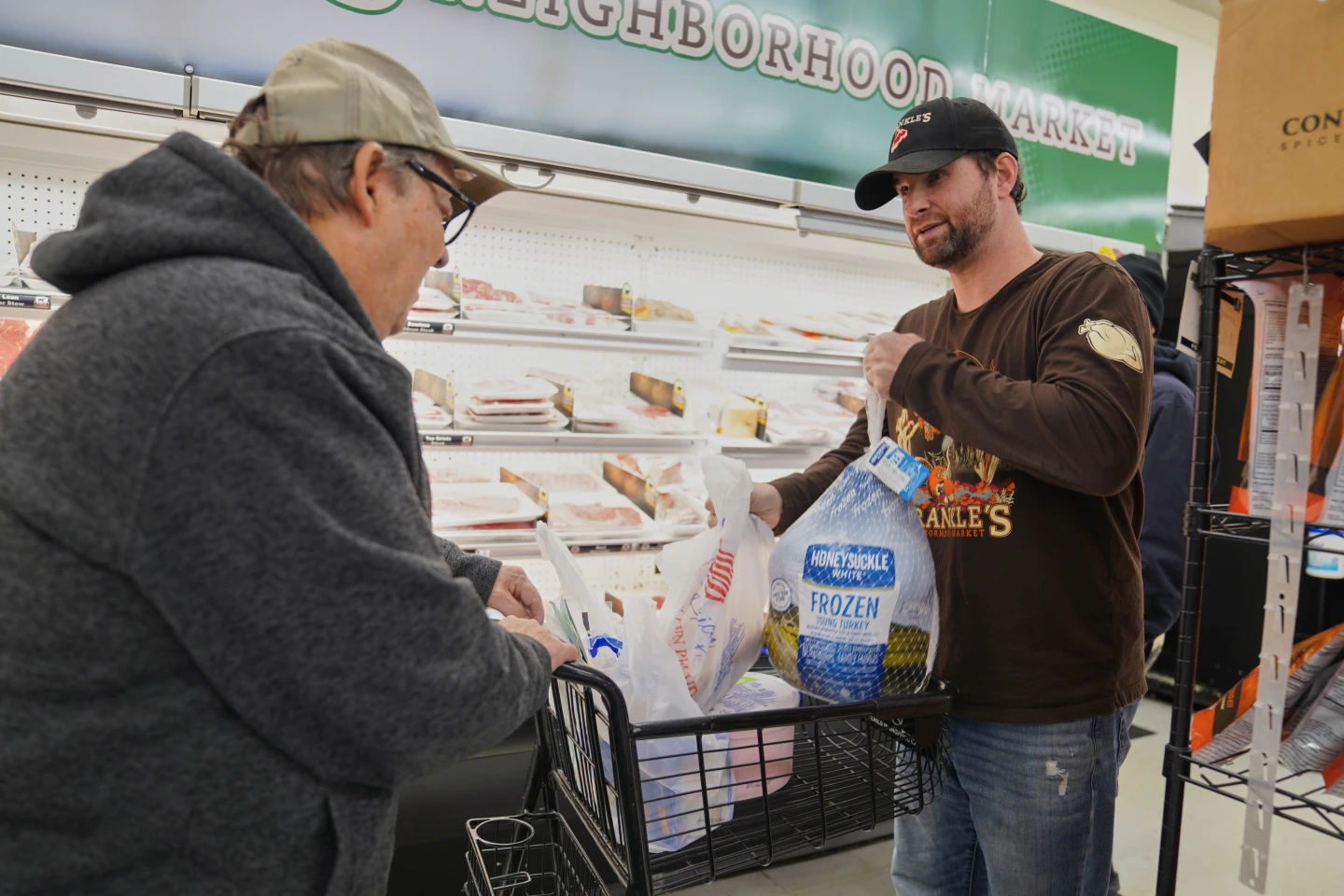
A little more than a year ago, Ryan Sprankle welcomed President Donald Trump to one of the three grocery stores his family owns near Pittsburgh. Trump was on the campaign trail; they talked about high grocery prices, and the Republican nominee picked up a bag of popcorn.
But these days, Sprankle would have a different message if Trump or any lawmakers visited his store. He wants them to know that delayed SNAP benefits during the government shutdown hurt his customers and his small, independent chain.
“You can’t take away from the most needy people in the country. It’s inhumane,” Sprankle said. “It’s a lack of empathy and it’s on all their hands.
The Trump administration froze funding for the Supplemental Nutrition Assistance Program at the end of October, impacting food access for some 42 million Americans. Recently, the U.S. Senate passed legislation that would reopen the federal government and replenish SNAP funds, but the U.S. House of Representatives still must consider the bill.
In 2024, SNAP recipients redeemed a little more than $96 billion in benefits, according to the U.S. Department of Agriculture. The majority—74%—was spent at superstores and supermarkets, but approximately 14% went to smaller grocery stores like Sprankle’s.
A Stalled Economic Engine
Etharin Cousin, a former director of the United Nations World Food Program, emphasized how the cutoff of SNAP benefits has induced immediate repercussions on grocers that operate on thin margins. “SNAP isn’t just a social safety net for families. It’s also a local economic engine,” Cousin remarked.
Walmart and Kroger avoided comments on the funding lapse but noted they are lowering prices and donating to food banks. Sprankle, however, remarked that diminished spending affects both his SNAP-reliant and non-reliant customers, causing them to shift to less expensive items or seek assistance from food banks.
“They have families to feed, they have kids for buy gifts for,” he said. “If I have to sell my truck, we’re going to give Christmas bonuses.”
Similarly, Liz Abunaw, who runs Forty Acres Fresh Market in Chicago, reported customers struggling to manage without SNAP, demonstrating the wider economic impact of food assistance programs.
From Neighborhood Shops to Food Pantries
The suspended food aid has also detrimentally affected nonprofit Kanbe’s Markets, disrupting their supply to convenience stores and food pantries. Their sales plummeted, forcing them to meet the increased demand from food pantries that anticipated double or triple their orders.
It is evident that decisions about food aid must be made rapidly, weighing the dire need against business sustainability. “It should be enough that people are going without food. Period, end of sentence,” said Kaniger, highlighting the urgency of the crisis.