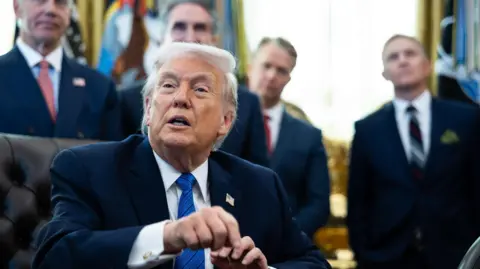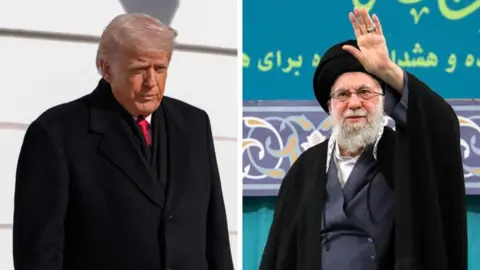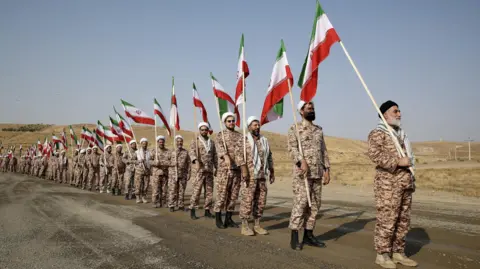
Earlier this month, US President Donald Trump sent a message to Iranians protesting against the regime that 'help is on its way.'
Since then there has been a slow, steady and significant build-up of US military forces in the region.
America, which is the world's most powerful military, has already shown it can strike Iran. Last June's operation 'Midnight Hammer' targeted its nuclear facilities.
That involved more than 100 aircraft, with B2 stealth jets flying all the way from the United States to deliver their 'bunker-buster' precision guided bombs. All without a single loss.
The question now is: Is the US getting ready to hit Iran, again?
Donald Trump's latest post on social media suggests he may, with him warning Iran that unless it makes a deal to limit its nuclear programme then 'the next attack will be far worse!'.
The US already has a significant military footprint in the Middle East, with up to 50,000 military personnel in the region.
Around 10,000 of those are based at al-Udeid Airbase in Qatar. But the US also has bases in Jordan, Saudi Arabia, the United Arab Emirates, Oman and Bahrain.
Over the past few weeks open source intelligence reporting has tracked scores of additional US military aircraft arriving in the region.
Photos taken of al-Udeid Air Force Base in Qatar show a number of new structures appearing.
The Pentagon does not provide a detailed list of those movements. But sources have tracked the arrival of F-15 fighter jets, refuelling tankers and transport aircraft.
Some transport aircraft are believed to be carrying additional air defence systems, which may suggest that America is taking steps to defend itself and its Gulf allies from possible retaliatory strikes.
Britain has sent a squadron of Typhoon jets to the region 'to boost regional security'.
The US Air Force is conducting a major exercise in the region, 'Agile Spartan', demonstrating its ability to deploy and sustain air power.
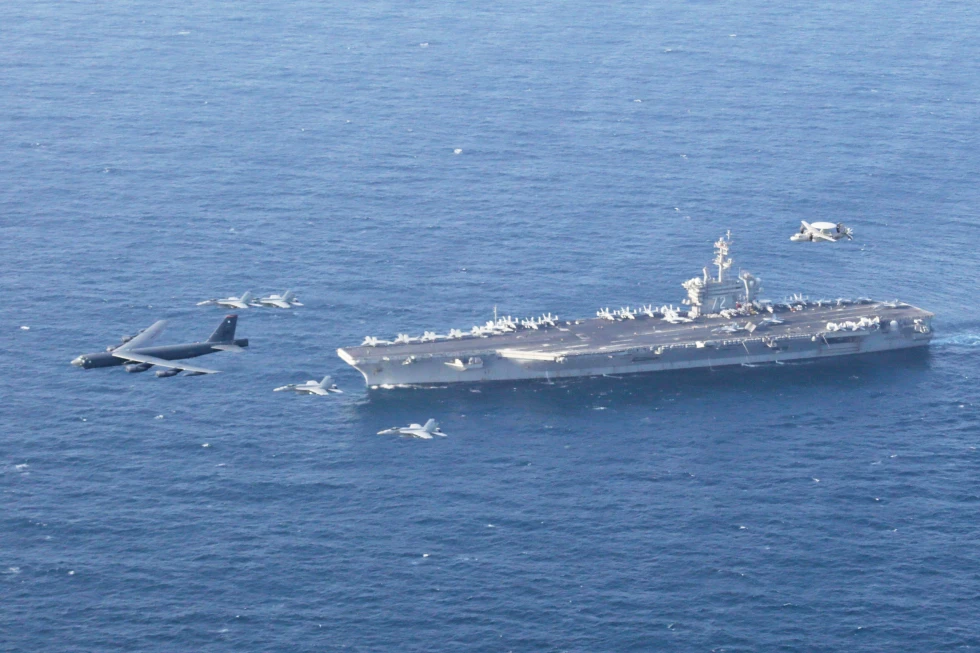
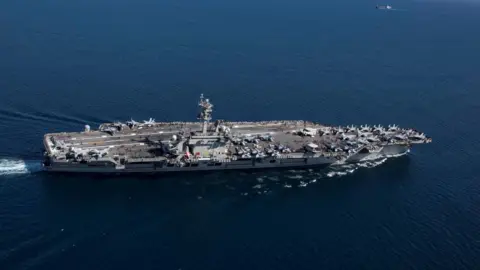
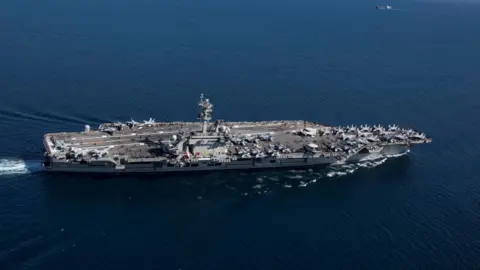
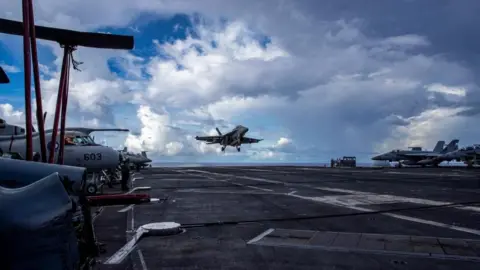
Just as significant is the arrival of a US carrier strike group to the region. The USS Abraham Lincoln, recently turned around from the Indo-Pacific to head for the Gulf, symbolizes American military power with an air wing of around 70 aircraft.
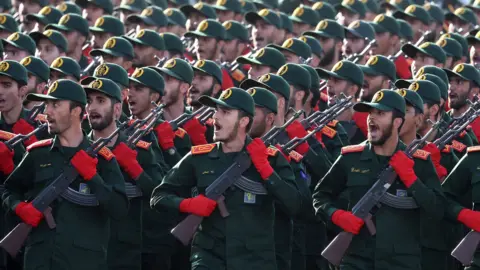
Among the options if strikes are ordered, the US could target Iran's military capabilities or directly strike regime centers, including the Revolutionary Guard Corps. However, President Trump has expressed a desire for a short, decisive intervention rather than a prolonged conflict.
Ultimately, the decision weighs between a strong military response and a pursuit of diplomacy to handle Iran's nuclear ambitions.