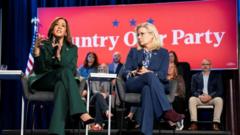
In a noteworthy move ahead of the upcoming election, Vice President Kamala Harris devoted Monday to directly engaging with independent and anti-Trump Republican voters across the key states often referred to as the Democratic Party's "blue wall." Over the two weeks leading to the election, Harris toured Pennsylvania, Michigan, and Wisconsin with Liz Cheney, the former congresswoman and prominent Trump critic, in a bid to appeal to a growing demographic of disaffected Republicans.
This campaign effort diverged from the usual rally-style events, opting for a “town hall” format. This choice reflected a deliberate strategy to connect with moderates and those leaning Republican. Each session featured notable figures from the other side of the political spectrum, such as Republican pollster Sarah Longwell in Pennsylvania, conservative commentator Charlie Sykes in Wisconsin, and Maria Shriver, niece of JFK, in Michigan.
The selected suburban venues were rich in college-educated voters who have been shifting their political affiliations amid the ongoing turbulence of the Trump administration. This initiative illustrates the changing landscape of party alliances as Democrats seek to consolidate support among undecided voters who once identified as Republicans.
A Pennsylvania GOP strategist backing Harris stated that genuine outreach involves Republican voices and reassurances for those who feel alienated. Cheney emphasized the importance of voting one's conscience, remarking that many Republicans may choose to support her message discreetly.
The gatherings attracted crowds that reportedly consisted of Republicans and undecided voters, yet the pre-selected questions and audience reactions suggested a predominantly supportive atmosphere. Attendees expressed concerns about the current political climate, with one retired teacher contemplating a vote for Harris due to worries about Trump's leadership.
During sessions, Cheney urged that character should impact presidential selection, challenging the metric of partisanship. The questions raised allowed Harris to reinforce her campaign platform, touching on crucial issues like healthcare and support for Ukraine, illustrating a unified stance against Trump’s policies and highlighting shared concerns, even from Cheney's conservative perspective.
Despite recent polling showing a competitive race between Biden and Trump, the possibility of “shy Republicans” breaking ranks could potentially bolster Harris’s path to victory. This outreach, while a brief commitment of time, underscores a strategic effort to sway undecided voters in the critical battleground states ahead of the election.